
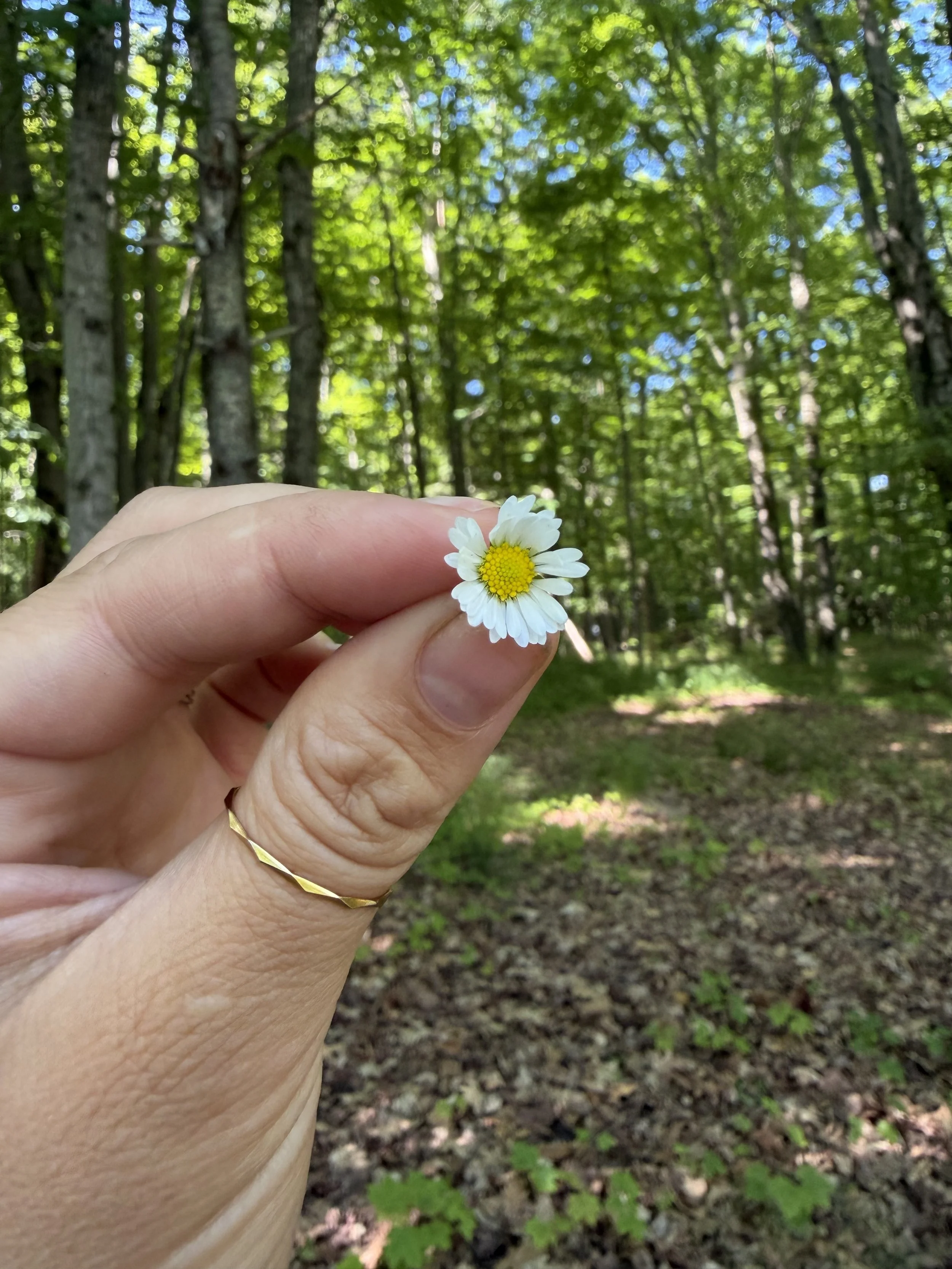
Life Updates — The Whirlwind Season
After months of seed starting, tulips, weddings, and learning to embrace margin, I'm sharing an honest look at the whirlwind season behind Bede's Blooms—and what's ahead.
I'm not going to pretend this post has been easy to sit down and write. Honestly, it's the opposite of easy — which is exactly why it's taken me until the very end of June to find the words. My admin side of things has been lagging hard since seed starting kicked off back in late winter / early spring, and it hasn't let up since. Seed starting bled into garden prep, garden prep bled into planting, planting bled into our spring CSA kickoff, and then — without so much as a breath in between — we were neck-deep in wedding season. Two full-service weddings, two à la carte, and a handful of custom orders, all stacked into one month.
So if you've been wondering where I went — I'm here. I'm just behind, and I think it's time I stopped pretending otherwise and instead told you the truth of what this season actually looked like.
💼 The Job I Get to Love
Before I get into the flowers, I want to say something I don't say enough: I love my full-time job. Genuinely, to my core.
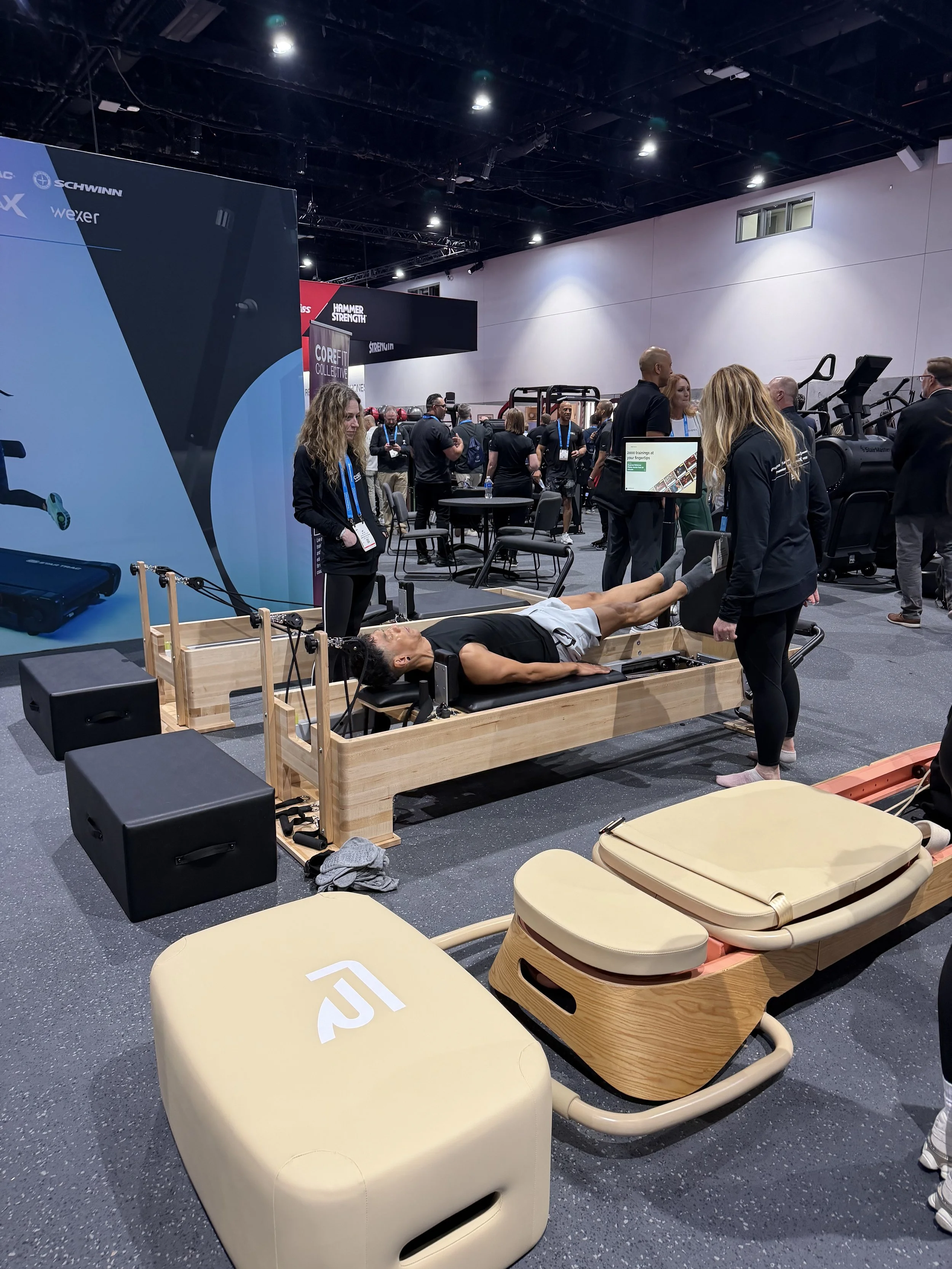
I work in the fitness industry, supporting some of the brands I've admired for decades. As someone who grew up an athlete, has always loved health and wellness, and is now walking through my own journey of rebuilding strength and health after having our son, it feels incredibly meaningful to spend my days contributing to a mission I genuinely believe in. Helping create products that encourage people to move, grow stronger, and care for themselves aligns so deeply with what I value.
The mission and vision of the company I work for line up so closely with how I want to live my life that it doesn't feel like two separate worlds I'm constantly trying to reconcile—it feels like one story, told in two beautiful genres.
Maybe that's always been who I am.
I've always been the girl who could spend all day outside with dirt under my fingernails, then shower, throw on a blazer or a dress, and feel just as at home. I love working with my hands, growing flowers, hauling compost, and embracing the physical work that comes with stewarding a small farm. But I also love leadership, business strategy, problem-solving, and the opportunity to contribute in a corporate environment.
For a long time, I think the world quietly tells us we have to choose. That we have to fit neatly into one identity. You're either the corporate woman or the farmer. The creative or the professional. The outdoorsy girl or the one with the fresh manicure.
But I've found that's simply not true.
I don't believe we're meant to become smaller versions of ourselves just because the world prefers simple labels.
God doesn't create us in boxes. He uniquely forms each of us with different gifts, passions, experiences, and callings that weave together into one life. Mine just happens to look like early mornings in the flower field and afternoons supporting a mission I believe in. One doesn't compete with the other—they make each one richer.
At first glance, fitness and flower farming probably couldn't seem more different. But to me, they're rooted in the same purpose: helping people flourish. One encourages people to care for the bodies they've been given. The other invites them to slow down, celebrate life's moments, and experience the beauty of God's creation. Somehow, they complement one another far more than people might expect.
That's why Bede's Blooms is not a "side hustle to escape the day job." It's the opposite.
My job gives our family stability. It challenges me to keep learning, growing, and becoming a better leader. It allows this flower farm to exist as the joyful, purposeful thing it's meant to be, instead of something I'm white-knuckling to survive on.
I'm deeply grateful for the people I work alongside, the leader I support, and the work itself. I want to keep showing up well in both places—which, if I'm honest, is a big part of why this season stretched me as thin as it did.

“I don’t believe we’re meant to become smaller versions of ourselves just because the world prefers simple labels.”
🧸 The Toddler, the Laundry Pile, and the Grief of "Tidy"
Here's the part nobody really talks about: when everything is in season at once — the farm, the weddings, the job — something has to give. And in our house this spring, what gave was order.
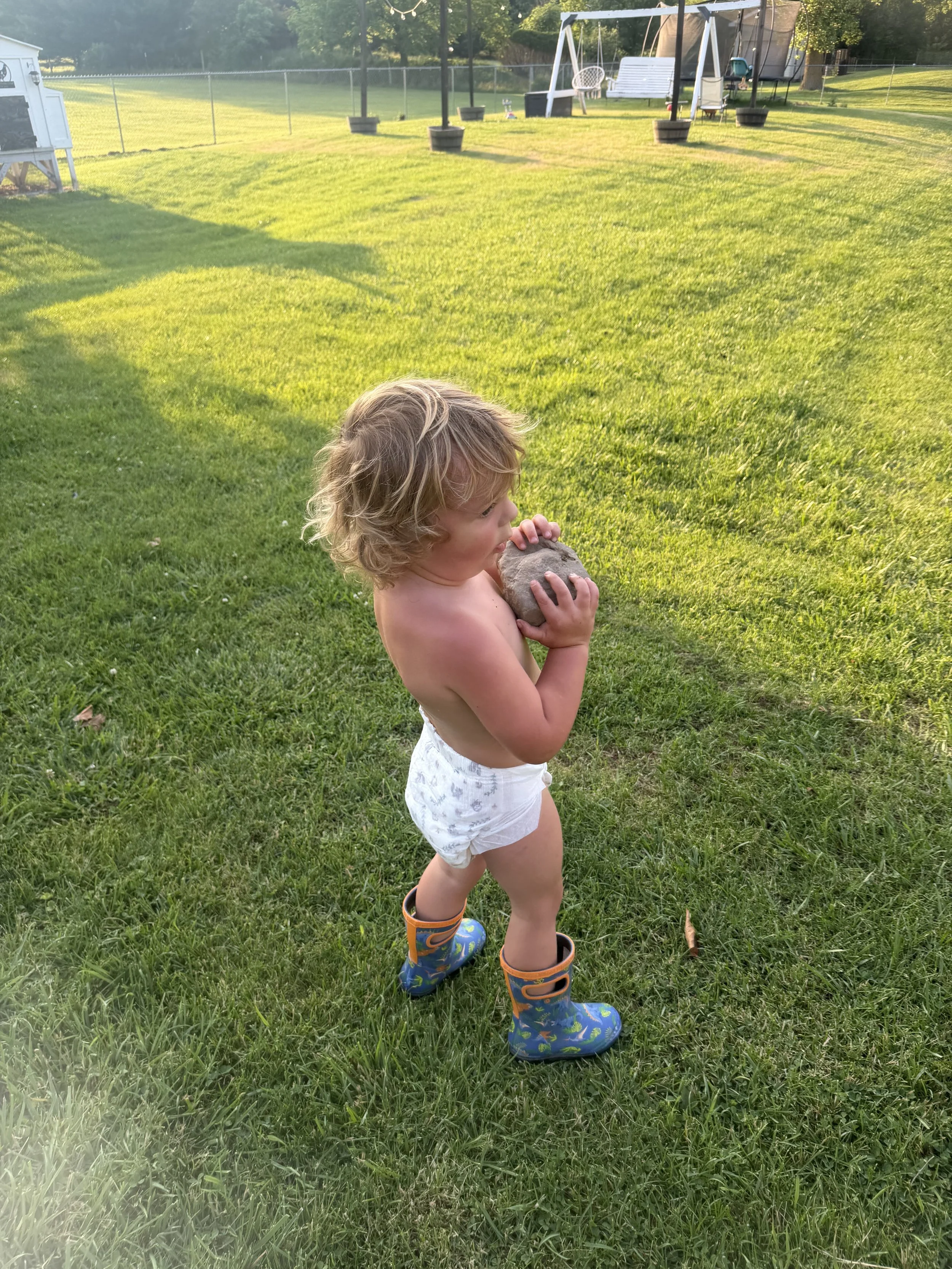
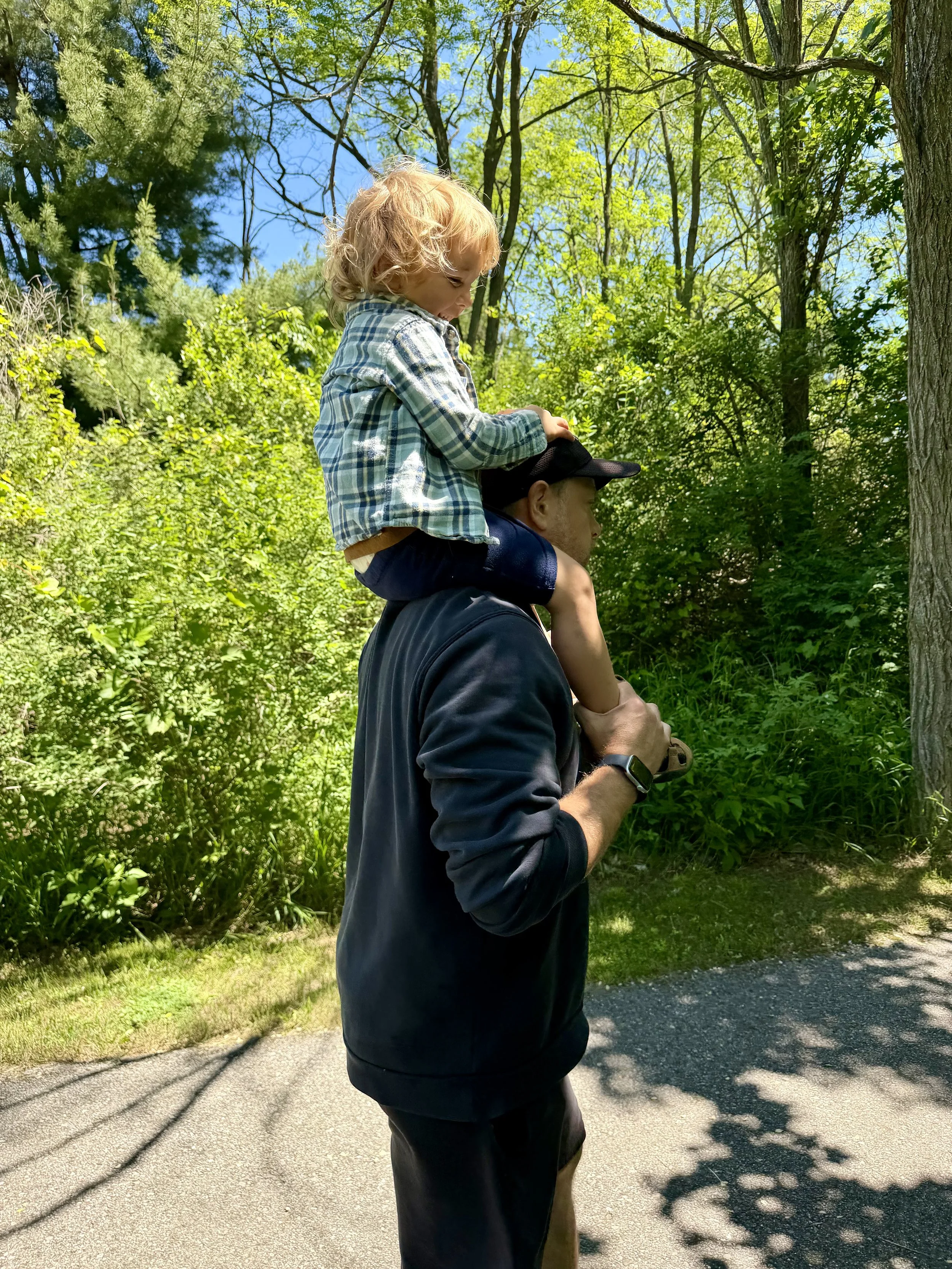
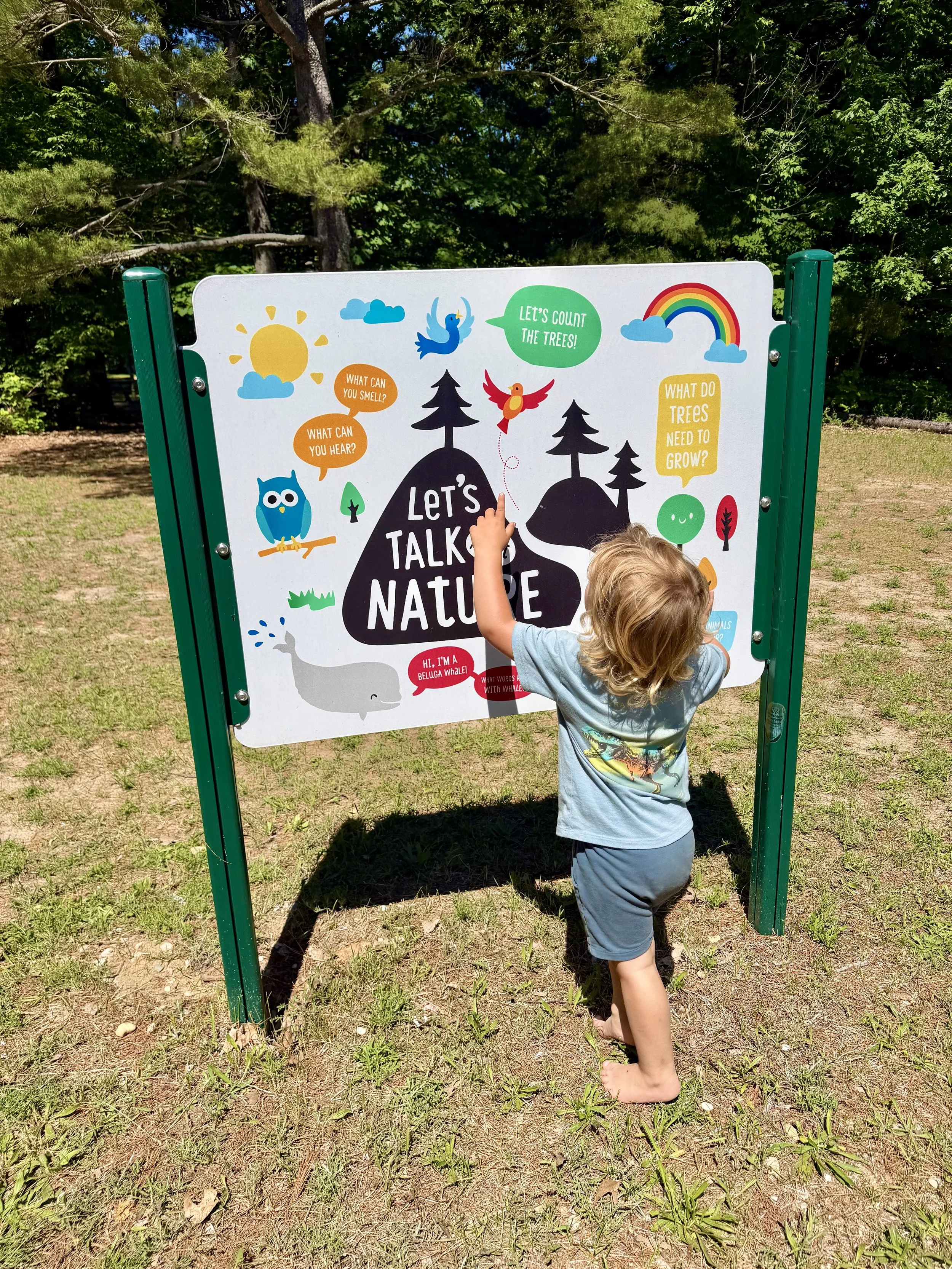
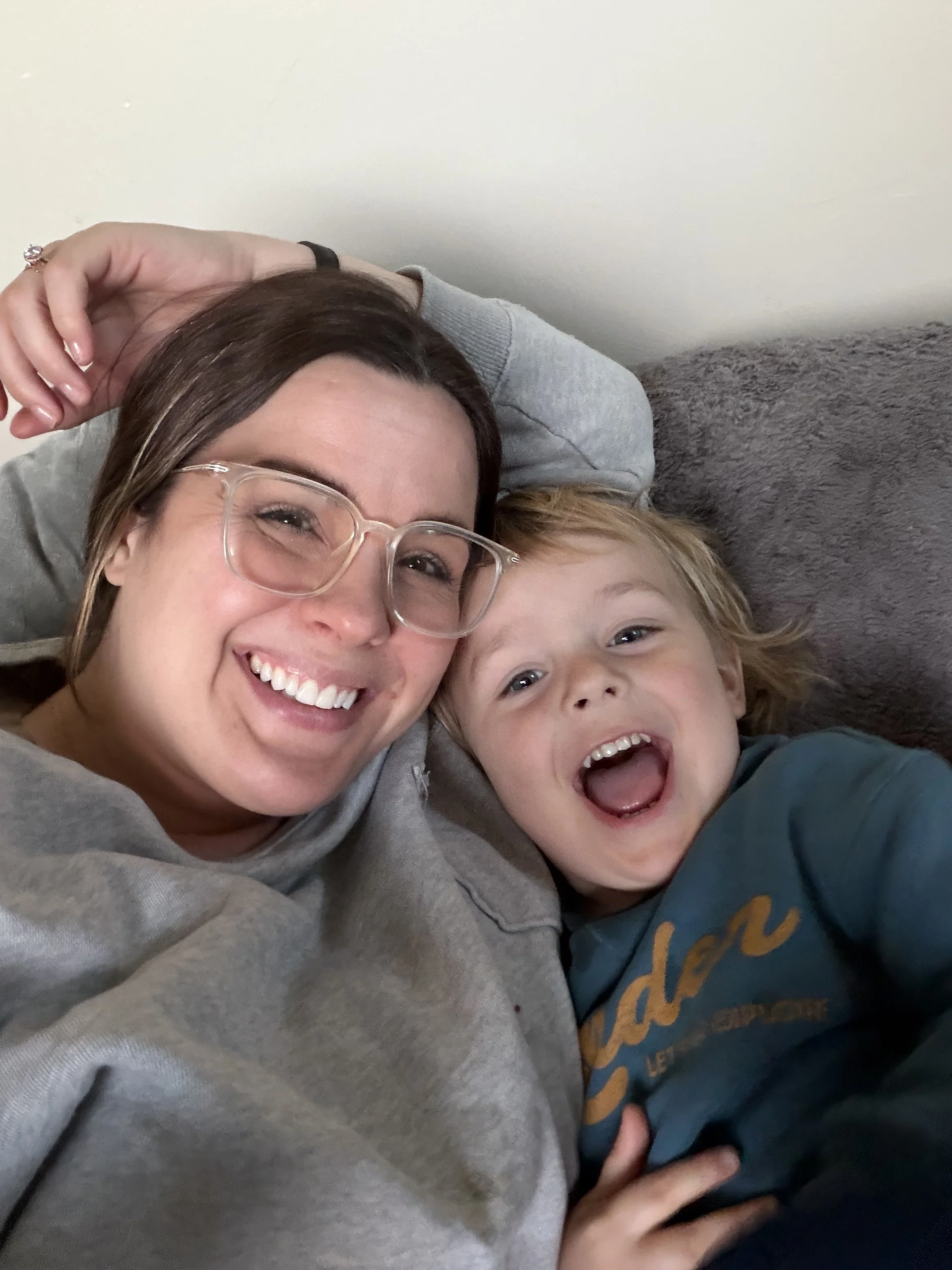
We have a two-year-old. If you've raised a toddler through "the scary two-to-three age range," you already know. Every basket of laundry my husband folds becomes, within the hour, a mosh pit on our bedroom floor. The neat stack by the dresser doesn't stand a chance. There are piles in corners of our house that exist purely because a toddler got into something and nobody has had the thirty consecutive seconds required to put it back.
I am a person who craves clear counters and put-away things. I grieve the version of our life where everything had a place and stayed there. And this spring, I had to make peace — again and again — with the fact that I cannot have both a spotless kitchen and a toddler's outstretched hand asking me to jump on the trampoline. Those two things are, sometimes, mutually exclusive. And the dishes losing is not a failure. It's a choice, made on purpose, by a tired mom who knows which one she'll remember in twenty years.
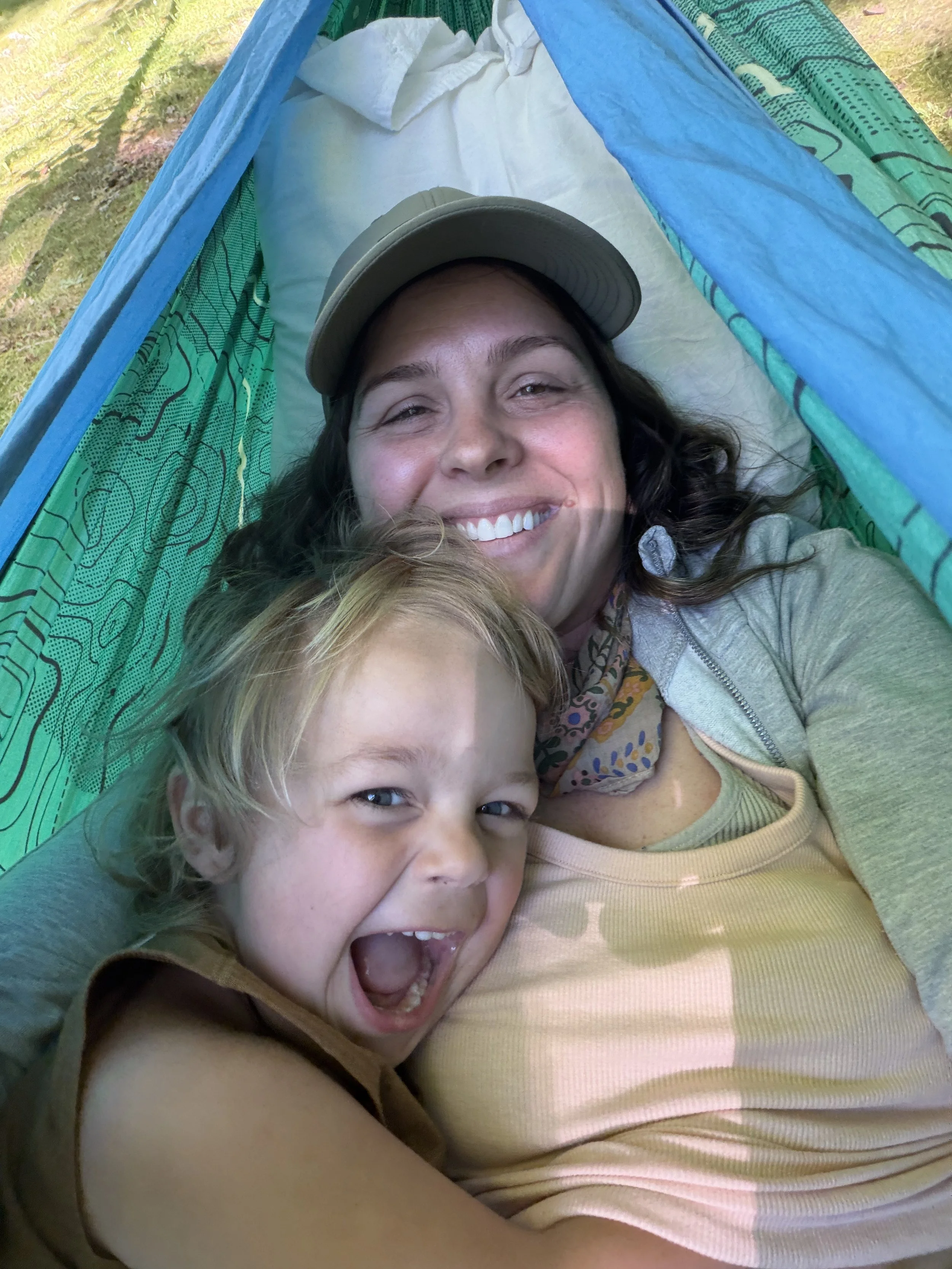
We don't have a village, not in the practical sense people mean when they say it. Our village, the ones that show up, are me, my husband, and my mom — three tired people doing the work of what used to take ten. Thankfully our older daughters are a huge help with their little brother when they're with us, and my husband has quietly carried more of our household — cooking, laundry, yard work, garden work, cleaning, all of it — through our biggest wedding month yet. I don't take that for granted for one second.

🌷 Why We're Done Growing Tulips (for now)
I have to talk about tulip season because it was, without exaggeration, the most stressful stretch of growing we've had.
Ironically, it was also our best tulip season yet.
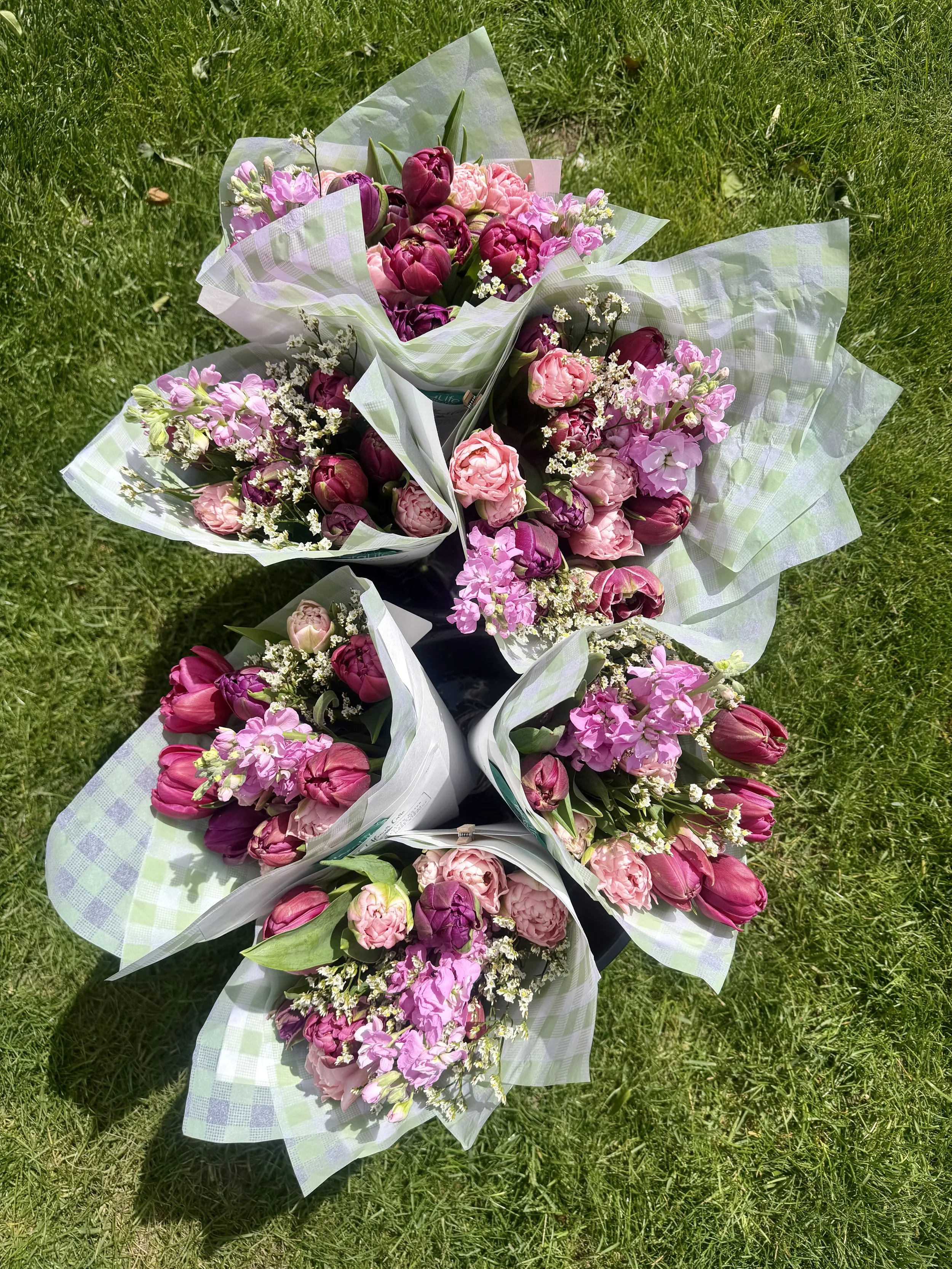
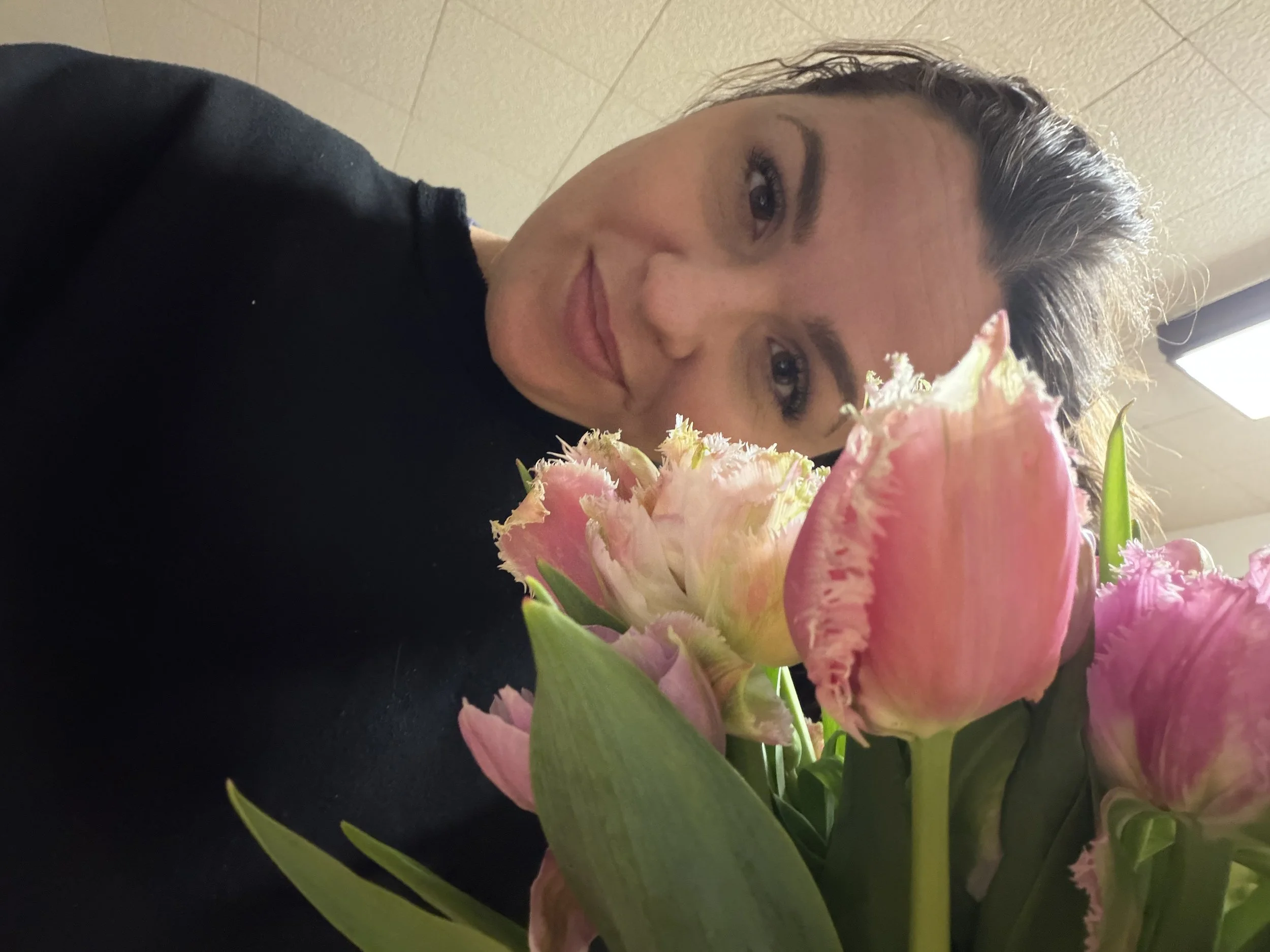
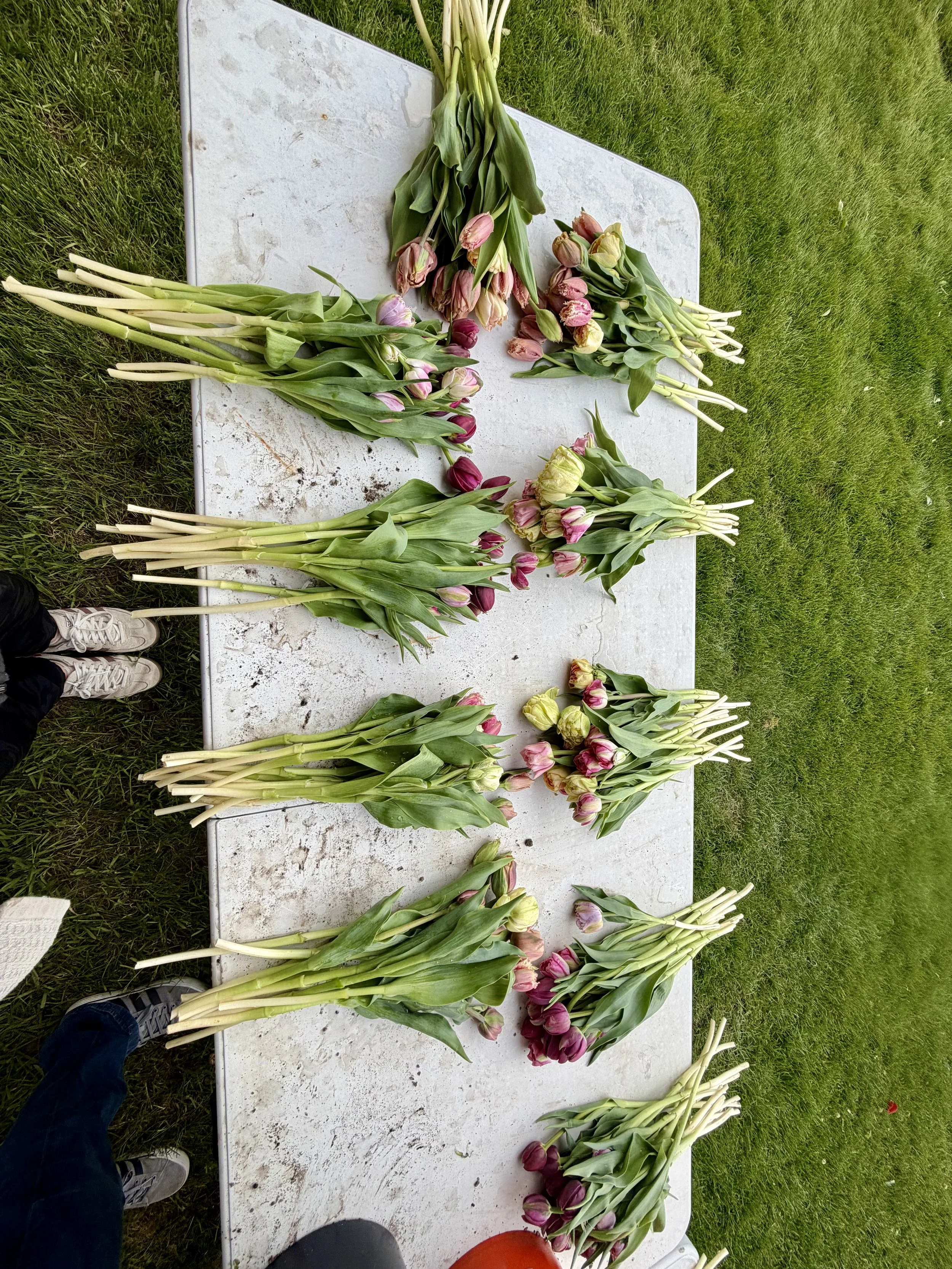
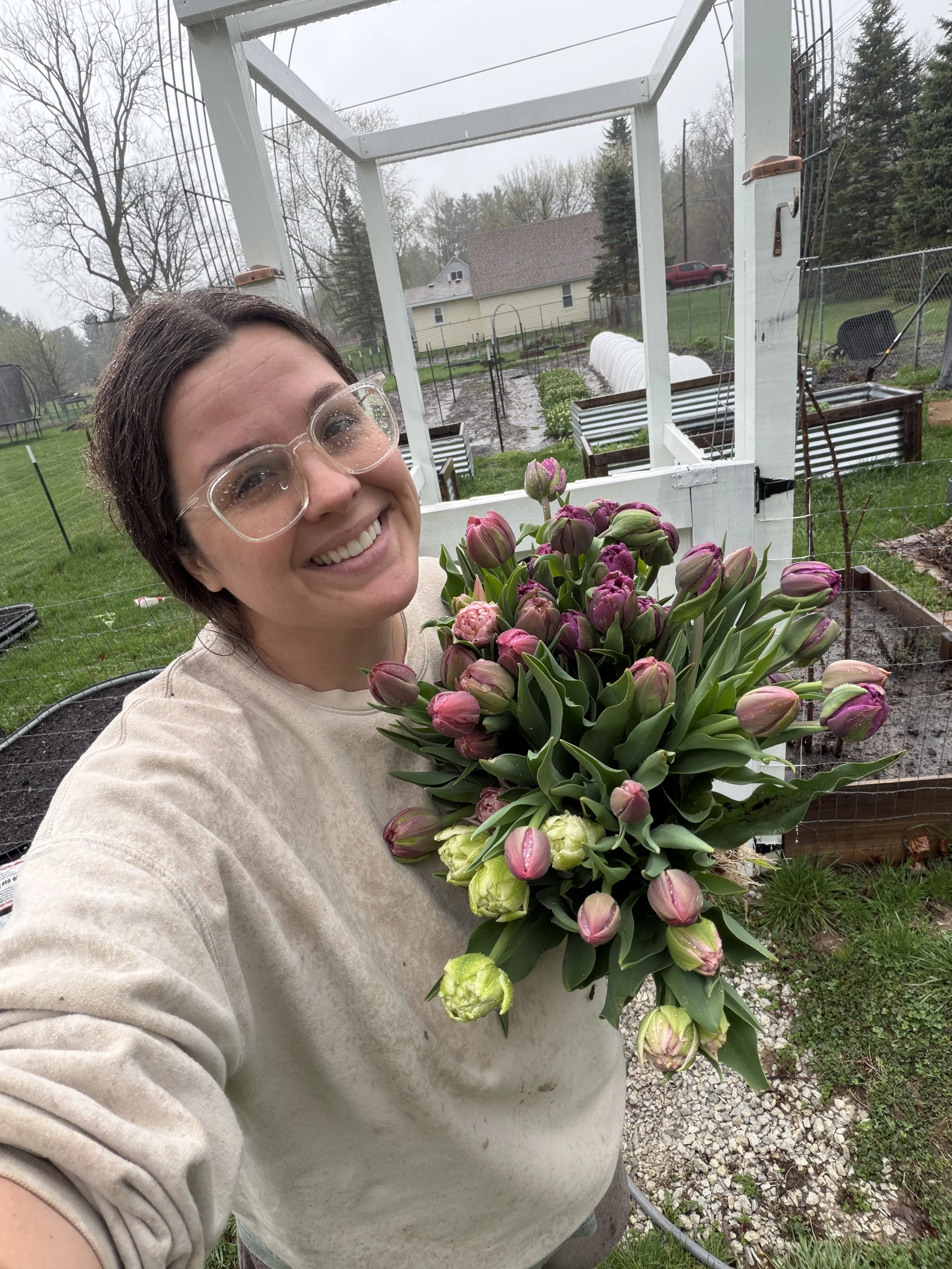
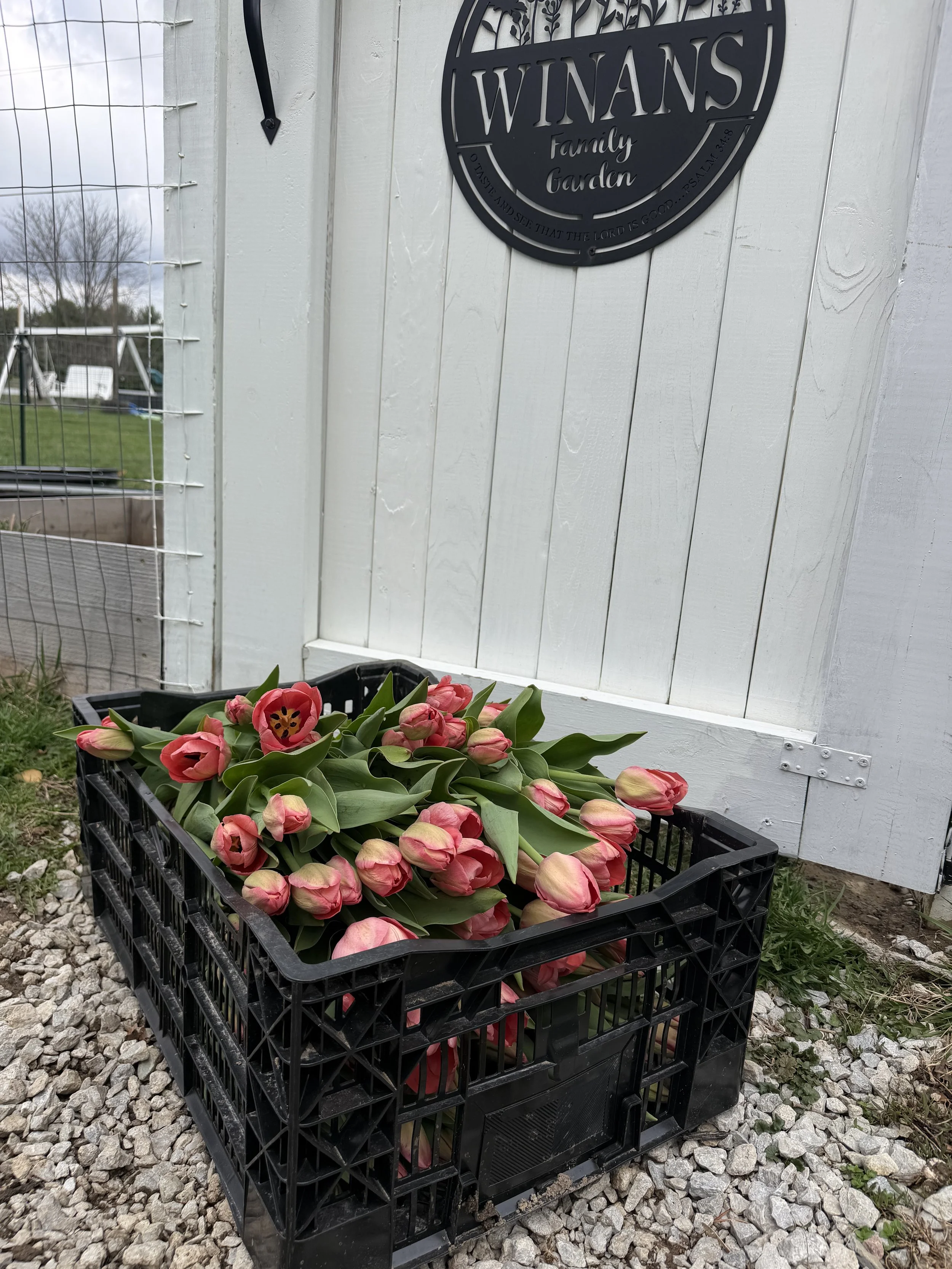
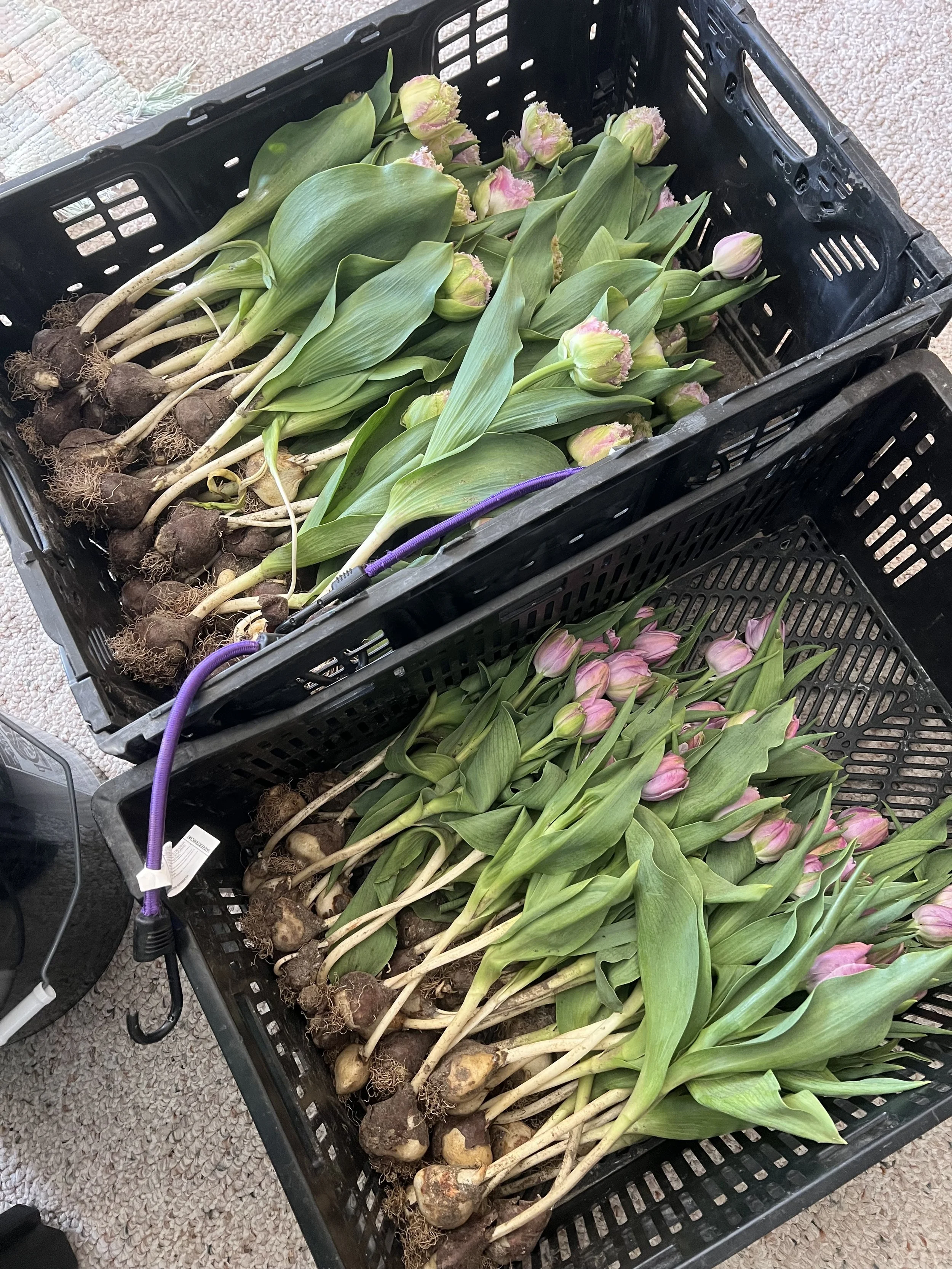
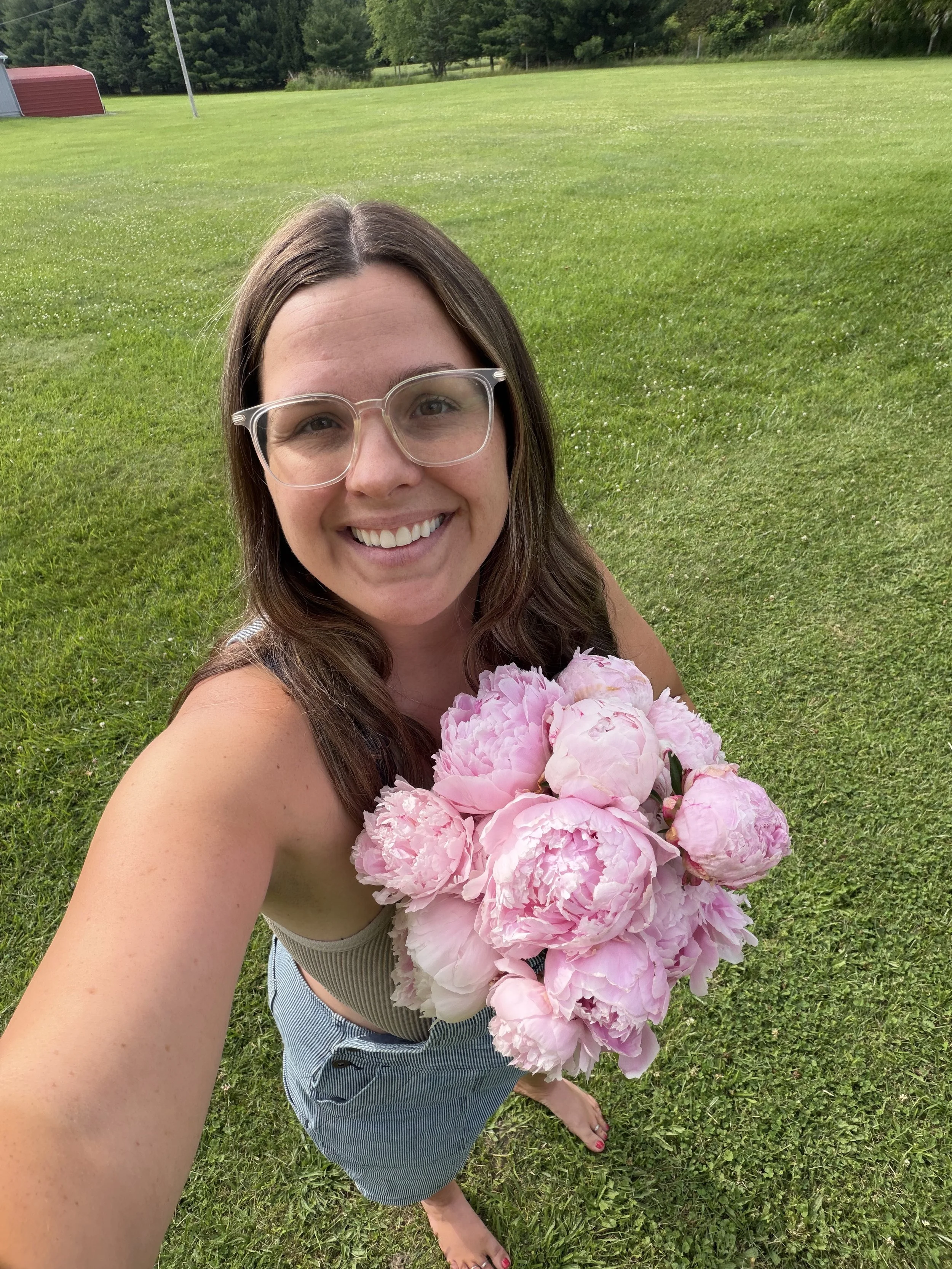
This year we planted just over 3,200 tulips, and they were absolutely beautiful. Healthy stems, vibrant colors, incredible varieties—it was the kind of crop that makes all the months of planning, planting, and waiting feel worthwhile. I genuinely love growing tulips. Putting together our Mother's Day pre-orders and watching so many of you come pick up armfuls of spring was one of the greatest joys of the season.
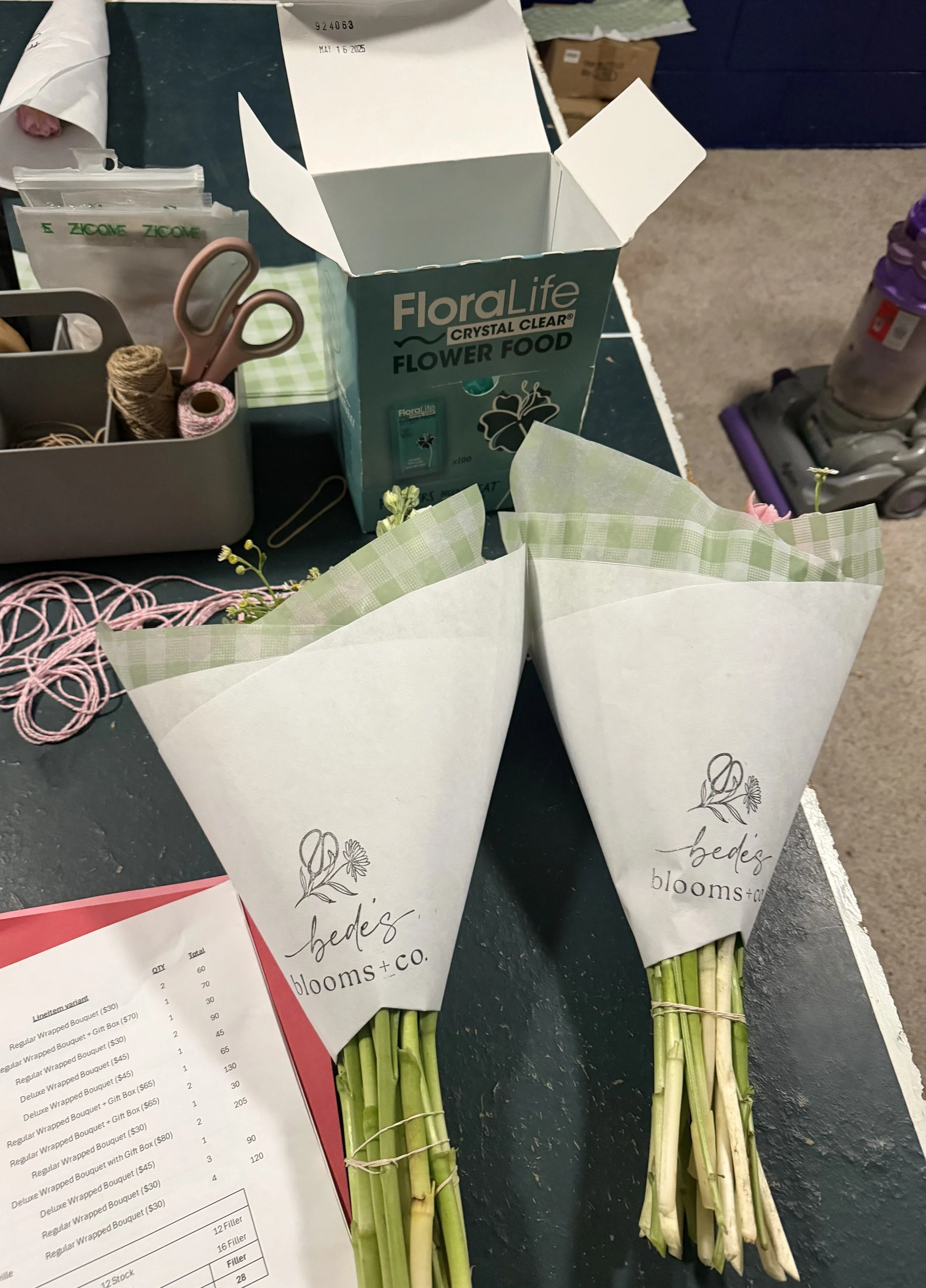
One of my favorite moments was partnering with our local church for Mother's Day, where we were able to provide more than 250 bud vases to celebrate the incredible women in our church family. Watching hundreds of simple stems become small expressions of love and gratitude reminded me exactly why I started growing flowers in the first place.
Which makes this next part all the more bittersweet.
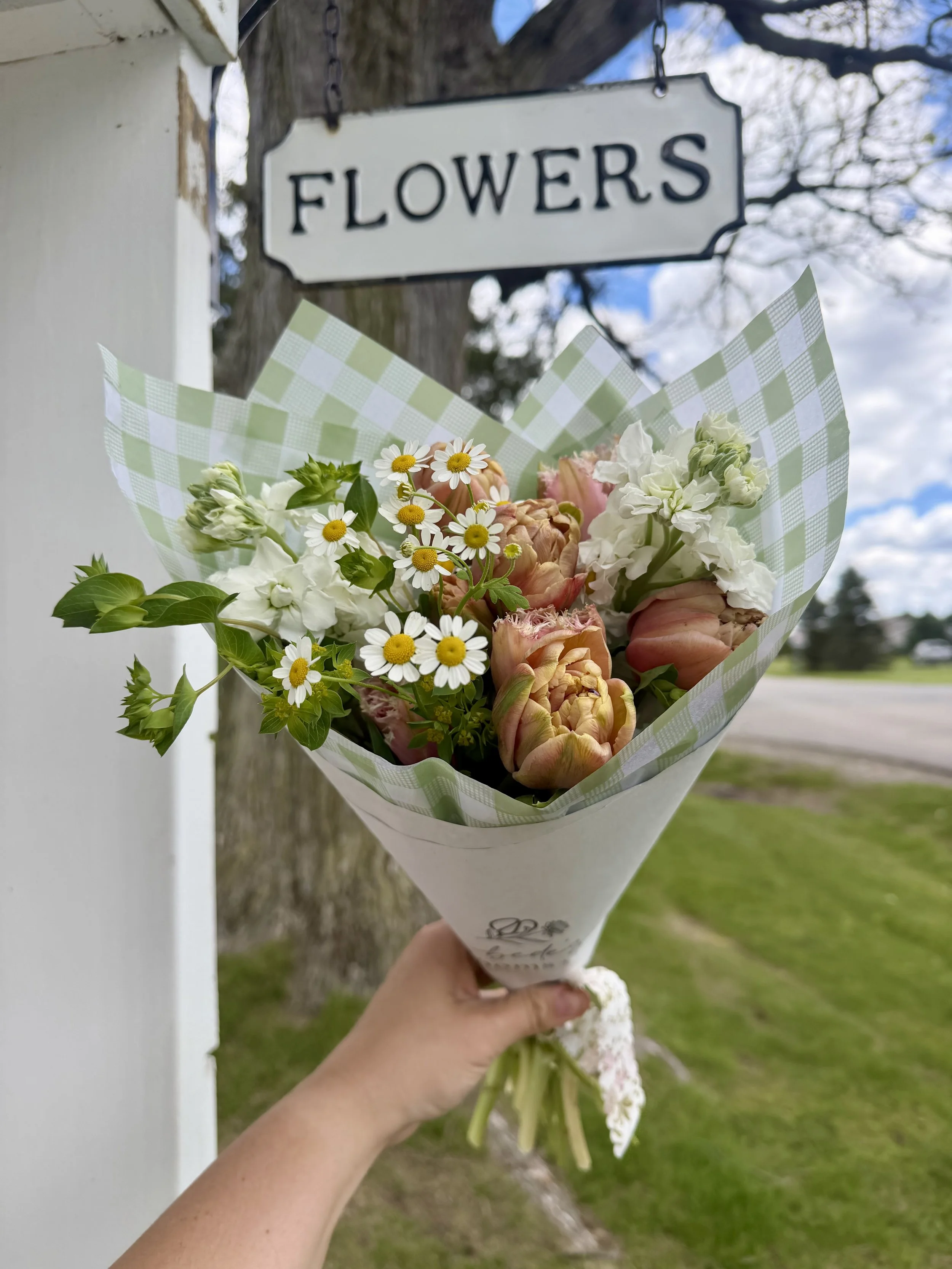
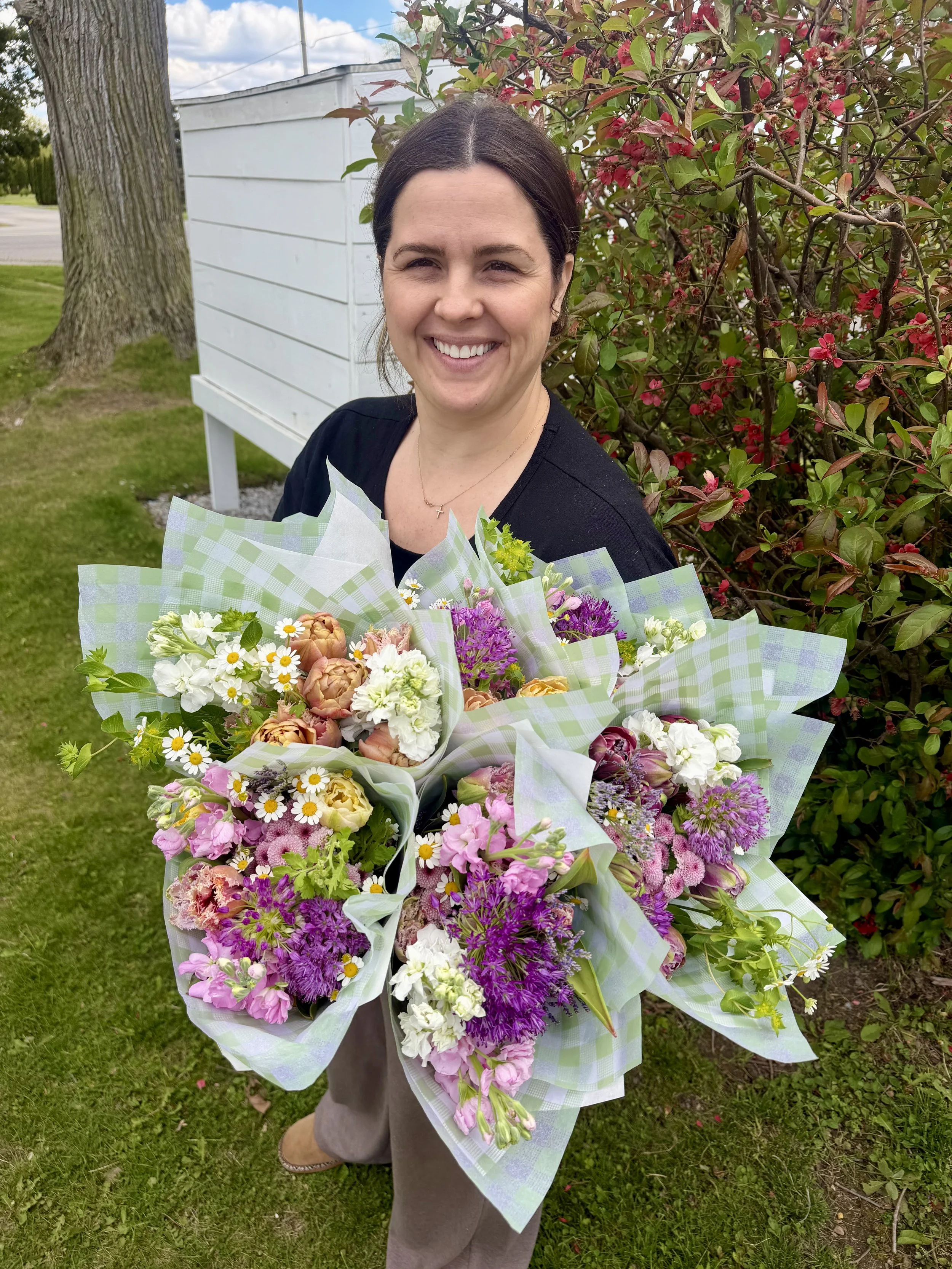
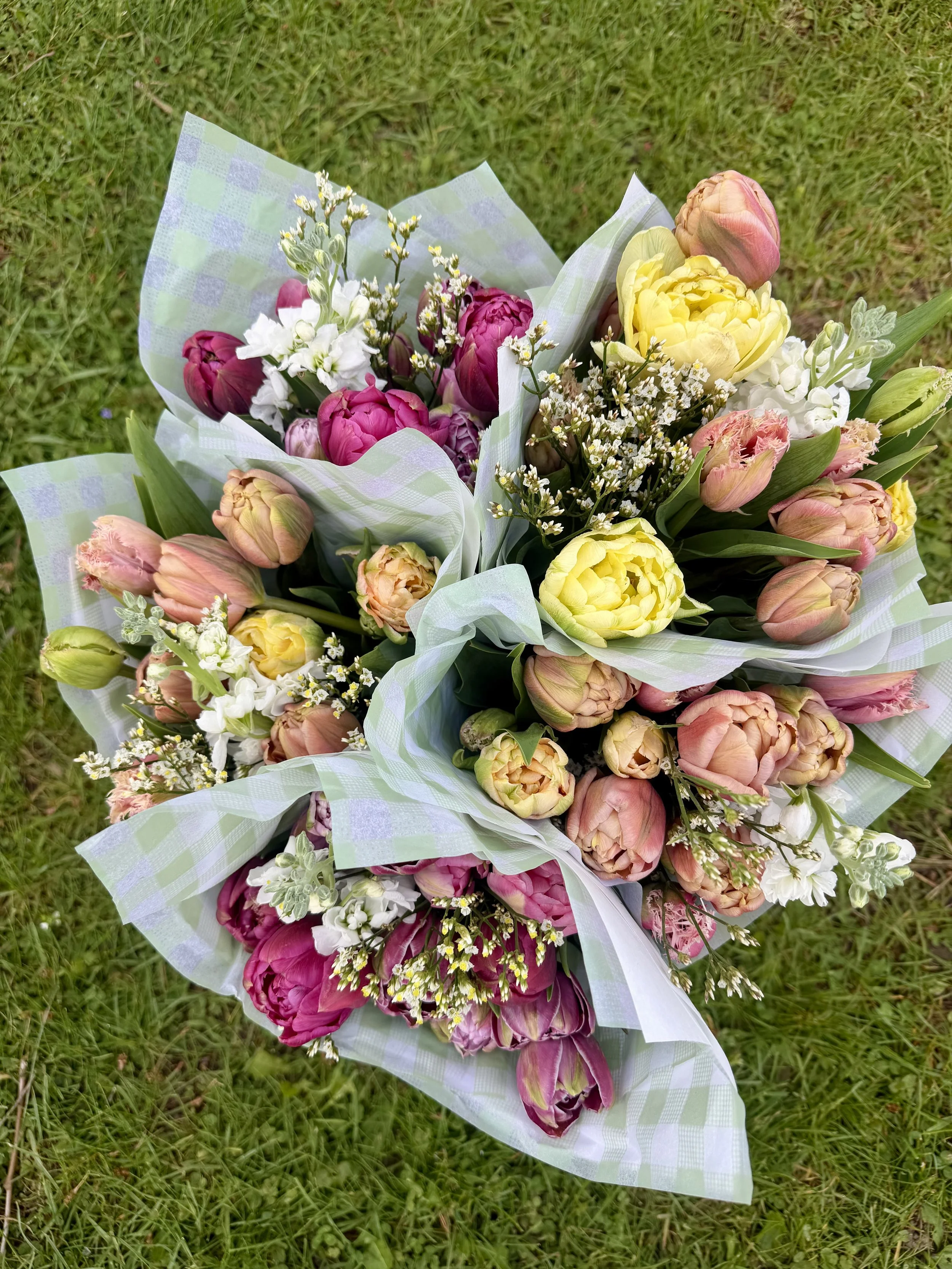
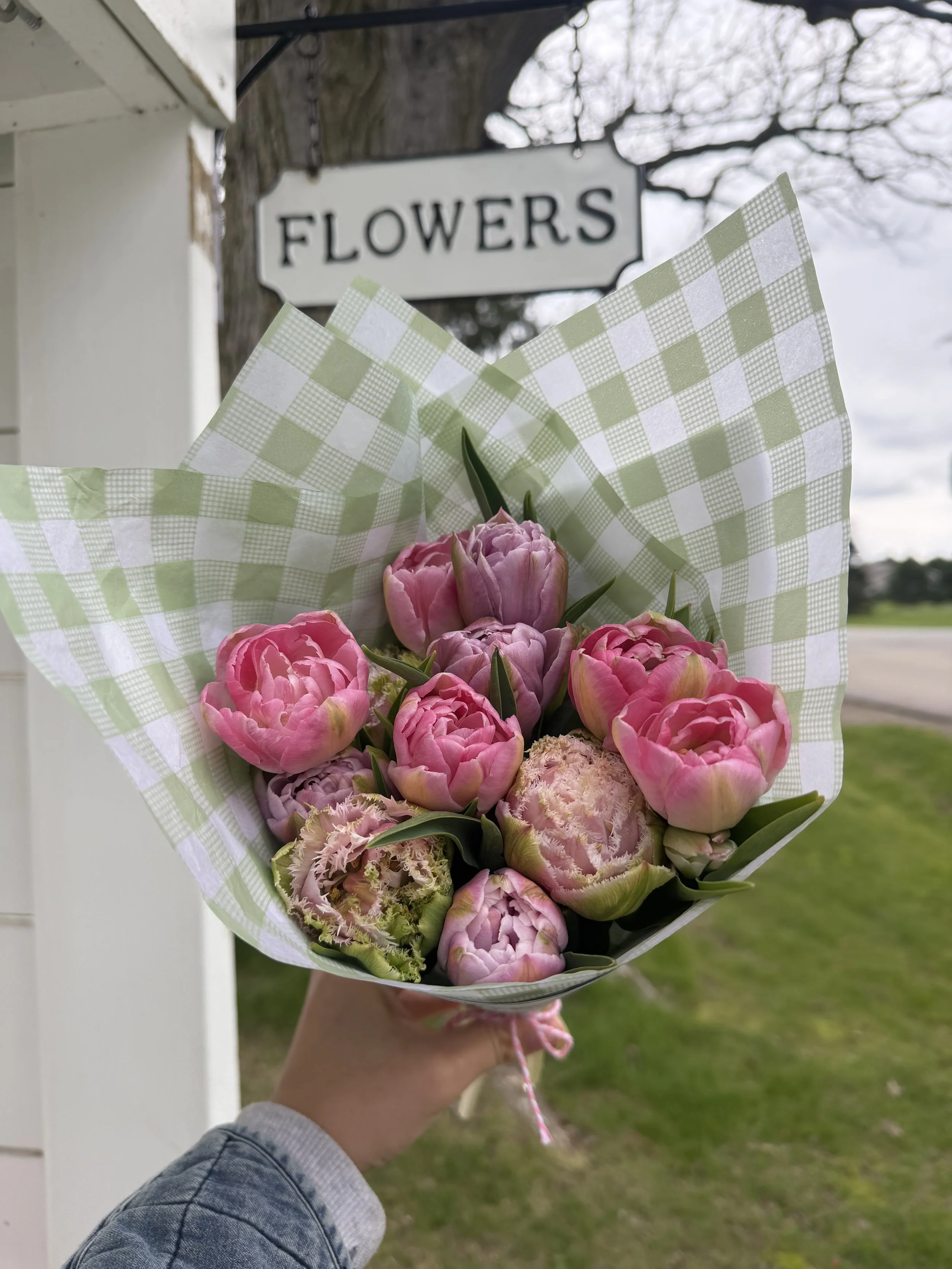
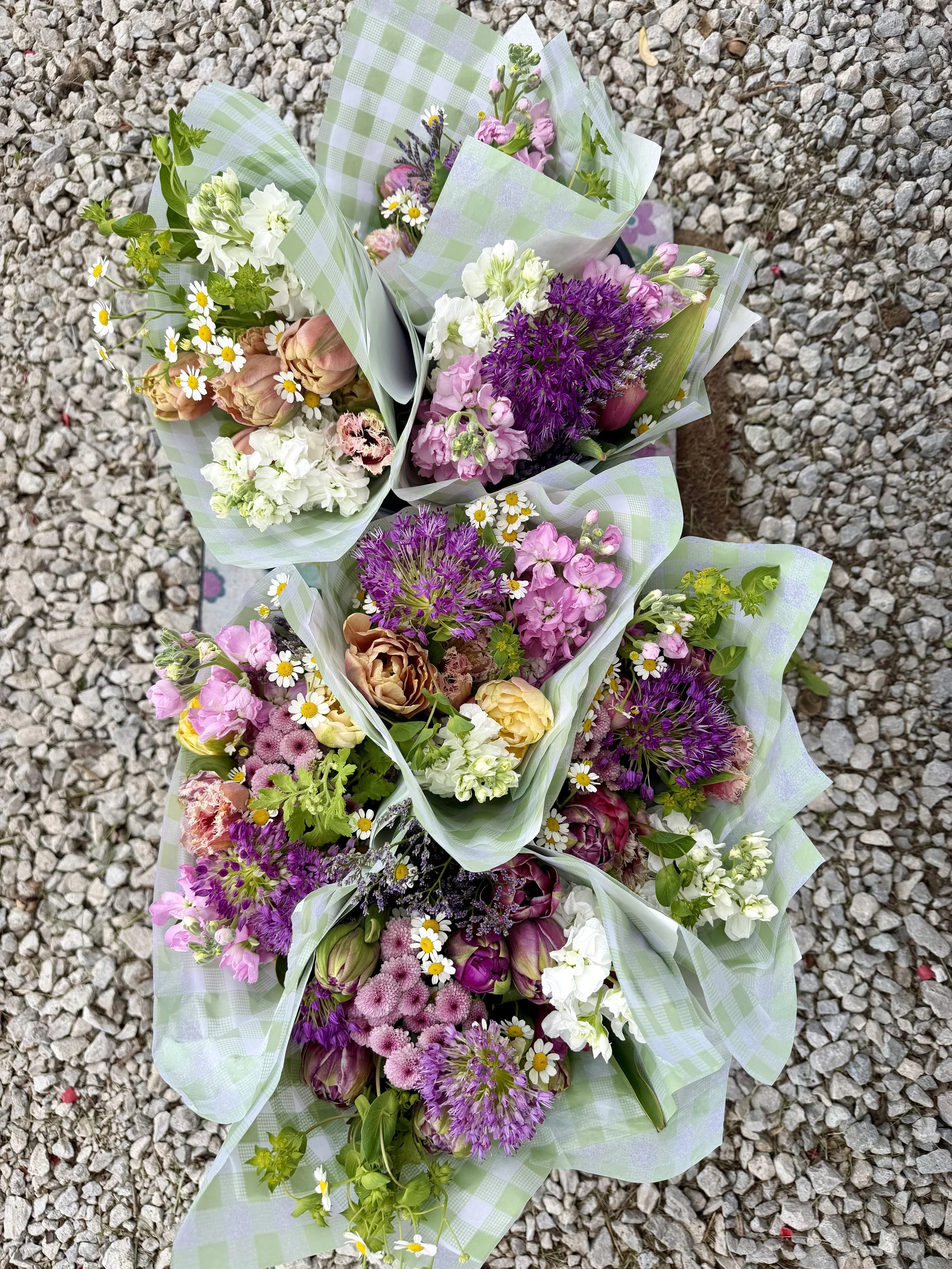
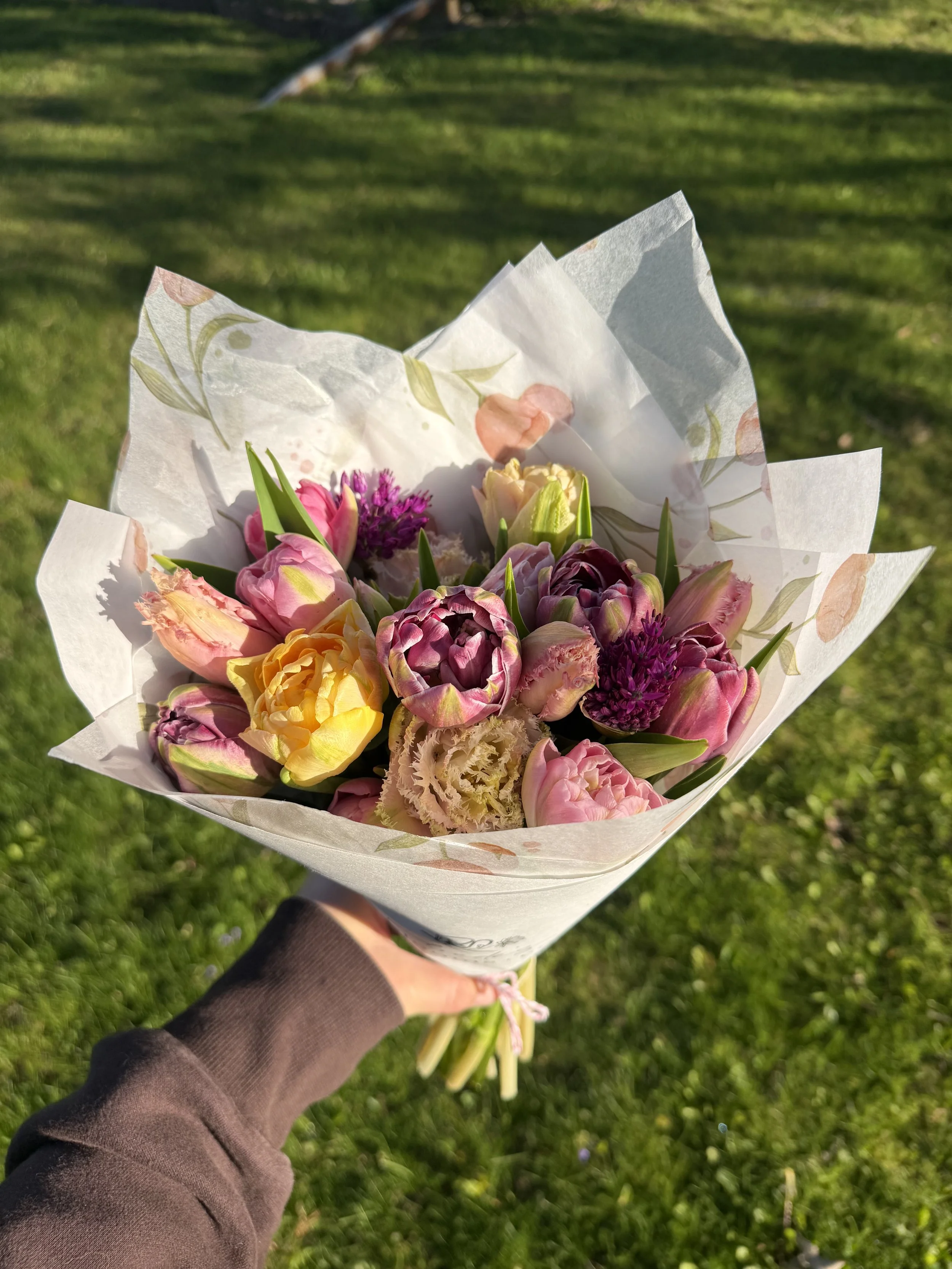
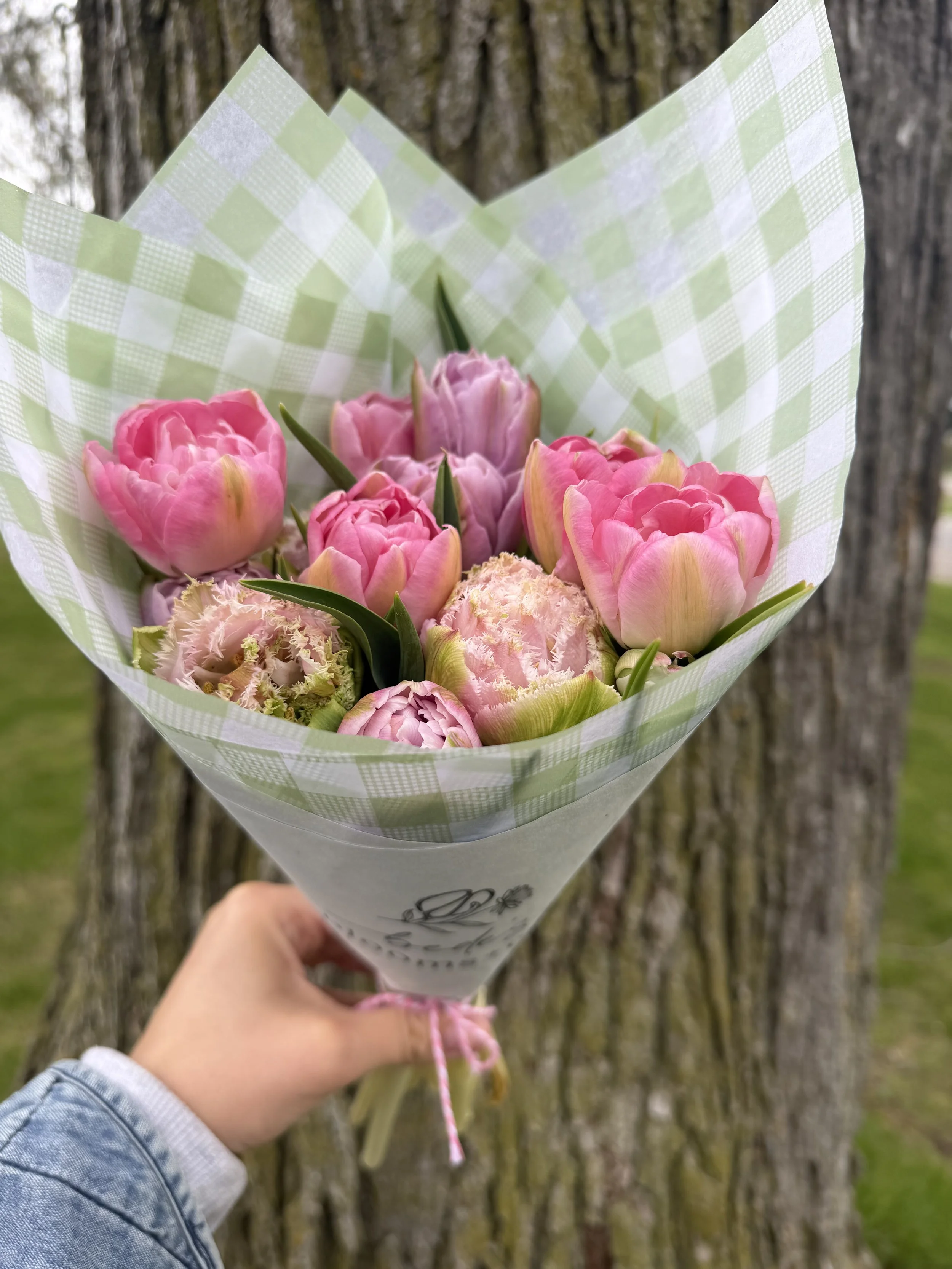
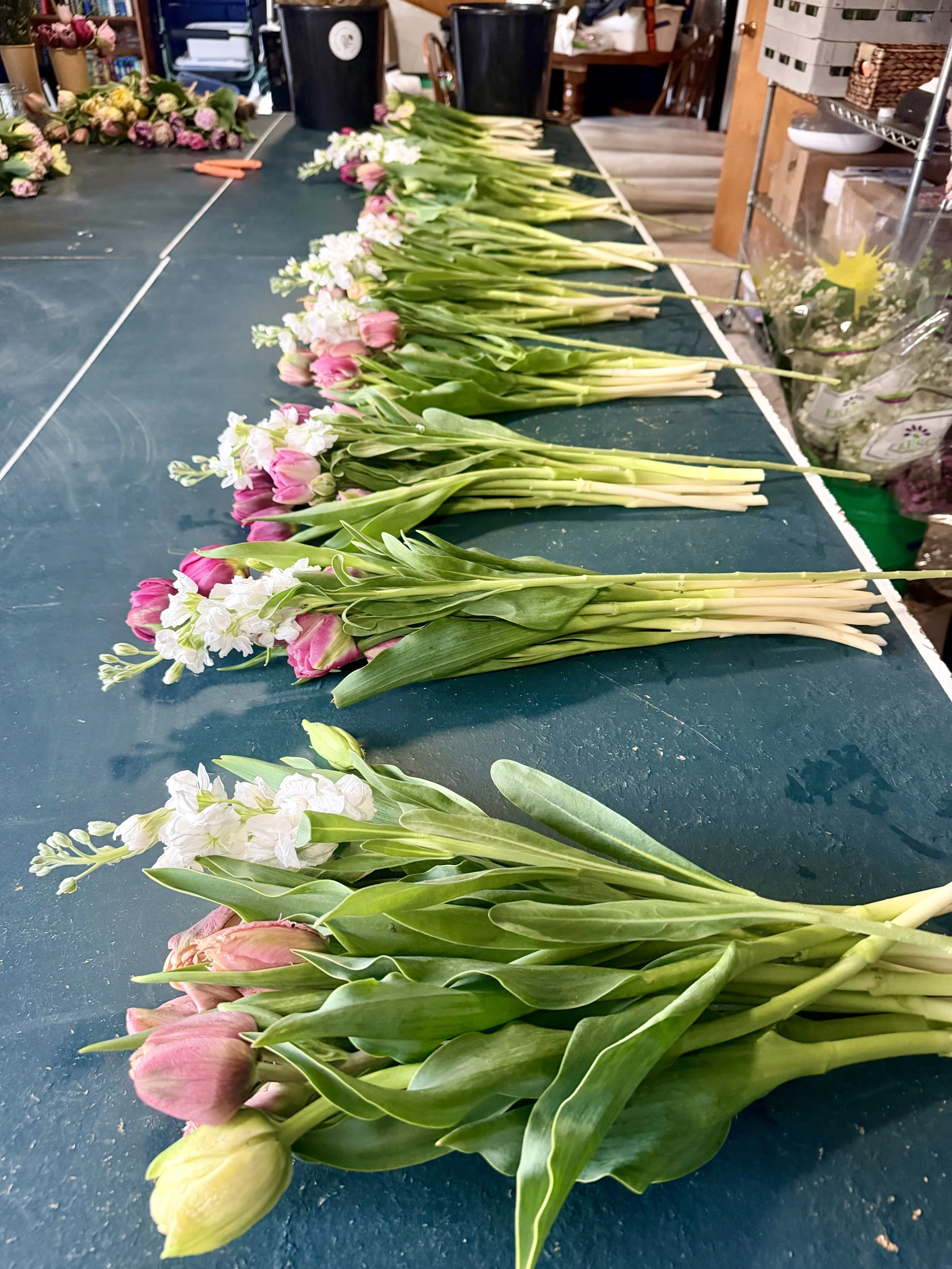
Mid-season, our floral cooler failed—and we are now without a cooler entirely. For a flower farm, that is not a small problem. We scrambled to carve out studio space in our old Michigan basement, a far cry from the she-shed with running water and a greenhouse I dream about, where I'm not lugging buckets and finished arrangements up a narrow staircase and through a too-tight door.
I'm choosing to stay grateful for the space we do have and to steward it well while we work toward something better. But I won't pretend the basement workaround was anything but a real strain this spring.
Because of the cooler, we ended up driving our tulips fifteen minutes each way, every single evening, to a flower-farmer friend's home who had cooler space to spare (thank you endlessly, again, Megan).
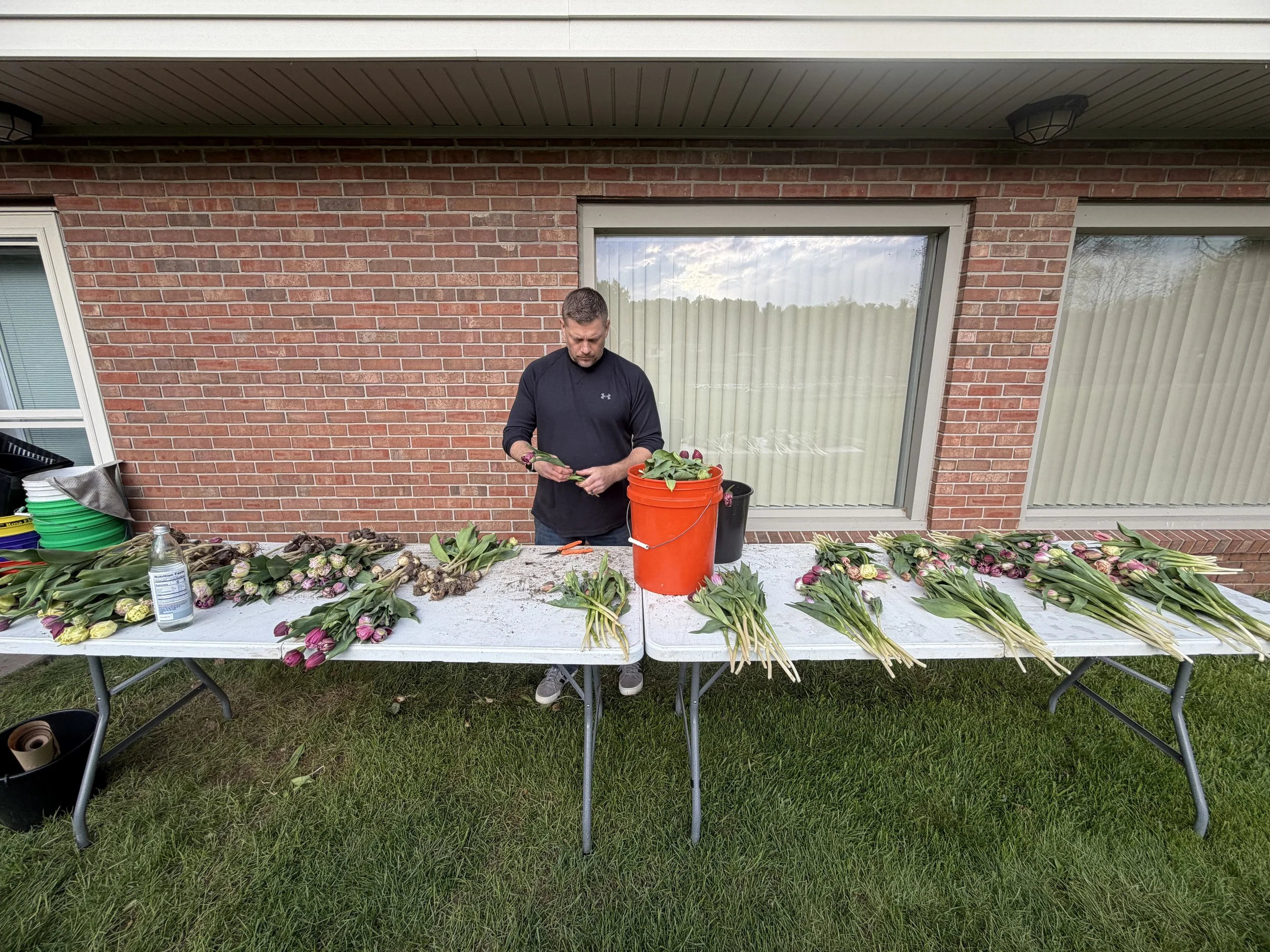
That meant harvesting before work in the early morning, working a full day, harvesting again at lunch (when I actually remembered to take one—something I'm working on), harvesting again after work, then sorting and arranging everything into crates for the drive. Most nights I wasn't home, showered, and in bed until after 11 p.m., only to be back up before sunrise to do it all again.
When we finally sat down and ran the numbers—bulb costs, shipping, the new tariffs, and labor and compost not even factored in yet—the reality became impossible to ignore.
Tulips aren't just breaking even for us.
They're losing money.
As much as I adore growing them, I also have a responsibility to steward this little business wisely. So we've made the difficult decision to step away from growing tulips at this scale.
That doesn't mean tulips are disappearing from Bede's Blooms.
We'll still plant a smaller collection of our favorite late-season varieties and continue offering a limited number of tulip bouquets and custom orders for our loyal local customers. I can't imagine spring here without a few rows of tulips.
But the days of planting over 3,000 bulbs are behind us—for now.
Sometimes growth doesn't look like adding more.
Sometimes it looks like having the wisdom to let go of something good so you have the capacity to pursue what's best.
That also means I'm taking Mother's Day off moving forward.
In the flower farming world, Mother's Day weekend is often called the Super Bowl of flower farming, and I understand why. But it's also draining, depleting, and, for us, simply not worth what it costs in sleep, margin, and time together.
I love providing flowers for our community and our church, and we'll continue finding meaningful ways to do that. But this mama would also like to spend a few of her own Mother's Days actually being present in them.
🏔️ Rest, Real Rest
After the weddings wrapped, we buried my grandpa, completed our spring CSA subscription program, and somehow still had custom orders sprinkled through it all. By the end of June, we were simply spent.
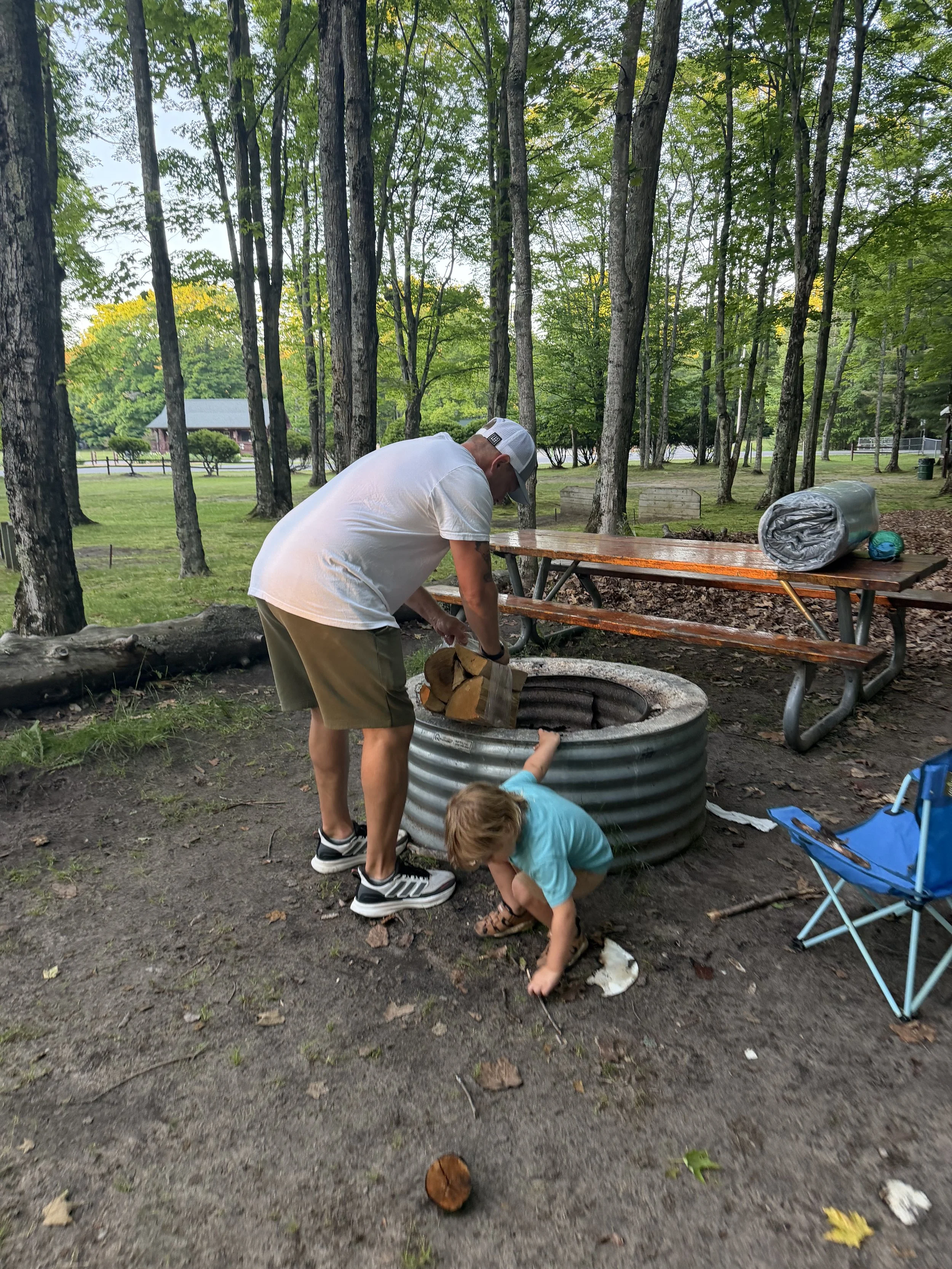
We escaped to Torch Lake for a few days, and it was exactly what our hearts needed. I still worked a little, even on PTO (old habits die hard), but we also found something we hadn't felt in months: margin. Long walks, slower mornings, actual chapters of books read during nap time, campfires, beach sunsets and the kind of deep breath that only comes when you finally stop running.
July has officially become our month to rest from weddings—a decision we made last year and one we don't regret for a second. I did make one exception for a sweet bride with mostly à la carte florals and a small ceremony installation, but otherwise we're intentionally slowing down. Soon, all five of us are heading to Colorado for a real family vacation filled with hiking, exploring, and, hopefully, plenty of sleep.
Here's the truth underneath all of it: we're not building this business to build an empire.
We're building it so we can take that trip.
So we can slowly renovate our fixer-upper, one project at a time.
So we have a second source of income that allows our family to breathe instead of constantly grind.
What a gift it is that the work of my hands also gets to be the work of my heart.



🌱 Looking Ahead: The Garden Never Stops
Now that the whirlwind of spring has settled, it's time to turn back toward the garden.
One thing I think surprises people most about flower farming is that there really isn't an "off" switch. The season simply changes. Spring's rush of seed starting, tulips, and planting gives way to succession sowing, endless weeding, pinching, deadheading, fertilizing, harvesting, and trying to stay one step ahead of Mother Nature.
The garden is beginning to settle into its summer rhythm. Bells of Ireland are standing tall and roses are blooming, while larkspur and delphinium continue putting on a beautiful show. Our second flush of orlaya—one of my personal favorites—is blooming just as beautifully as the first. Poppies, scabiosa, rudbeckia, gomphrena, and phlox are all adding their own texture and color to the field, and the snapdragons are just about ready to steal the show. The zinnias, cosmos, sunflowers, celosia, dahlias and many others are stretching taller every day, while the lisianthus I've been eagerly waiting on all season is finally putting on height. Before long, the garden will look completely different than it did just a few weeks ago.
There's something beautiful about that.
Every season asks something different of us.
Spring asks us to trust.
Summer asks us to tend.
Autumn asks us to gather.
And each one reminds me that growth almost always begins long before anyone else can see it.
🌼 What's Still Available
We still have a handful of Summer CSA Flower Subscription spots available if you'd love fresh, locally grown blooms throughout the season.
Looking for flowers for a special occasion? We also love creating custom arrangements for anniversaries, birthdays, new babies, get-well wishes, celebrations, or simply because flowers don't always need a reason. If you'd like to surprise someone special—or treat yourself—simply fill out our inquiry form or message us, and we'd be honored to create something beautiful just for you.
Planning a wedding this fall? We still have limited availability for August through November weddings, whether you're looking for full-service florals, à la carte options, or something in between. We'd love to hear your story.
If there's one thing this season has taught me, it's that growth isn't always about doing more.
Sometimes it's about creating enough margin to enjoy the life you're working so hard to build.
We're learning to steward this business a little differently. To choose sustainability over hustle. Presence over pressure. Quality over quantity.
I don't think we've figured it all out yet—but I do think we're moving in the right direction.
Thank you for being here. Thank you for buying flowers, reading these stories, cheering us on, and supporting this little dream of ours. It means more than you'll ever know.
Next time, I'll finally tell you about the three June weddings that completely stole my heart. Each one had a story far too beautiful to squeeze into this update, and I can't wait to share them with you!
With tired hands and a full heart,
Alex
False Spring, Root Work & Necessary Pruning
In this season of false spring, I’ve been doing quiet root work — pruning what no longer serves the business, reclaiming my herbal beginnings, and choosing slower, more intentional growth before the bloom.
There’s something about a false spring.
A few warm days. The light shifts. The air softens. You can almost believe winter is over — but you know better. There’s still cold ahead. Still work to do underground.
That’s what this season has felt like for me.
I’ve been quiet — not because nothing is happening, but because everything is.
Most days begin early. A slow morning routine. Breakfast. Devotional. A workout to ground myself before the day begins. Then I step into work — often stretching into PST hours — learning, growing, giving my very best in this season of my career.
After dinner and family time, I usually head right back into another layer of work — timelines for brides, administrative details, sourcing, planning, dreaming. Two or three evenings a week are spent building the foundation for weddings you won’t see until months from now.
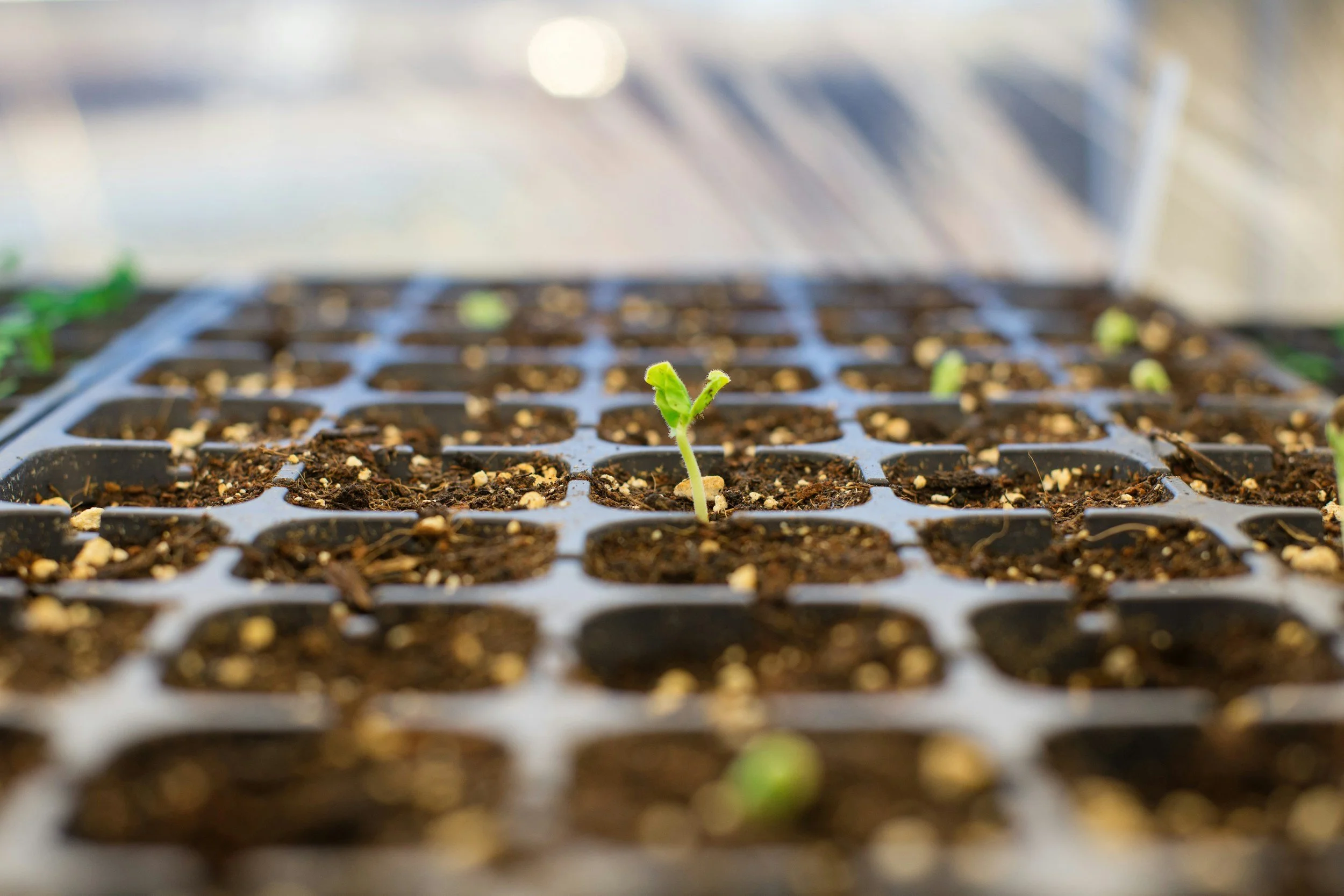
And in the margins? We’re building out a proper workshop in the basement. Starting seeds. Mapping garden plots. Preparing for the growing season. Planning every detail for my 2026 brides (I truly cannot wait for this year’s weddings — they are going to be so beautiful).
But beneath all of that activity, something even more important has been happening.
Reflection.
This has been a huge season of asking hard questions about the business.
What are we keeping?
What are we letting go of?
What is actually worth the labor, time, and energy it requires?
If something is not profitable, life-giving, or aligned — it’s being cut.
Not dramatically. Not emotionally.
But intentionally.
Just like pruning a plant before the growing season, I’ve been trimming what taxes the roots so the right things can flourish. Some offerings are shifting. Some systems are simplifying. Some things are ending so better things can grow.
And in that pruning, I’ve also rediscovered something tender.
Herbalism.
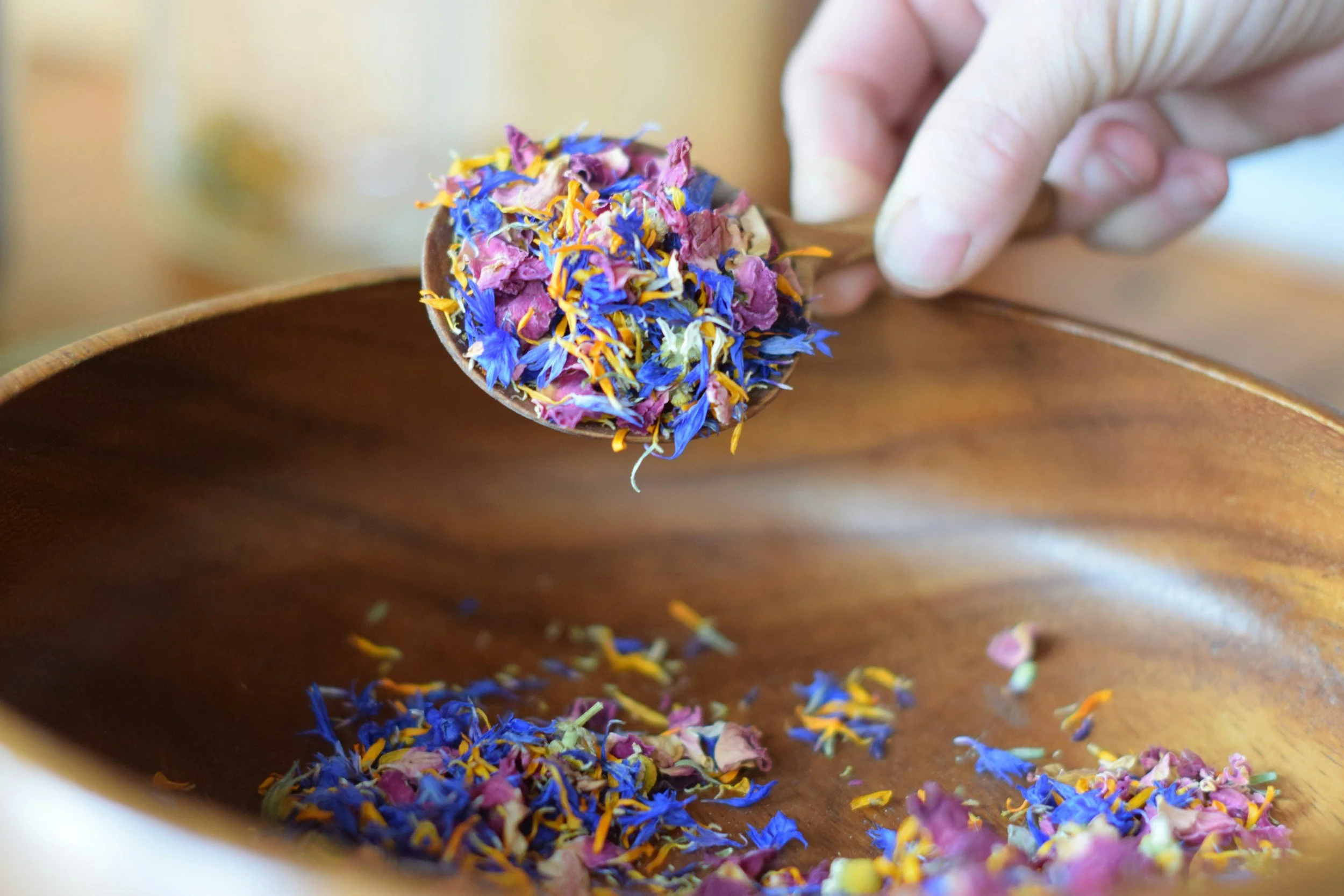
Long before Bede’s Blooms became what it is today, it began as Bede Botanical + Co. That is still our LLC name — because this business was originally founded on medicinal health and healing through herbs and botanicals. Flowers were never just aesthetic to me. They were medicine. Story. Stewardship. Restoration.
Somewhere along the way, other demands crowded that quiet love out.
And in this season of reflection, I’ve been reclaiming it.
Studying herbs again. Reading. Remembering why I started.
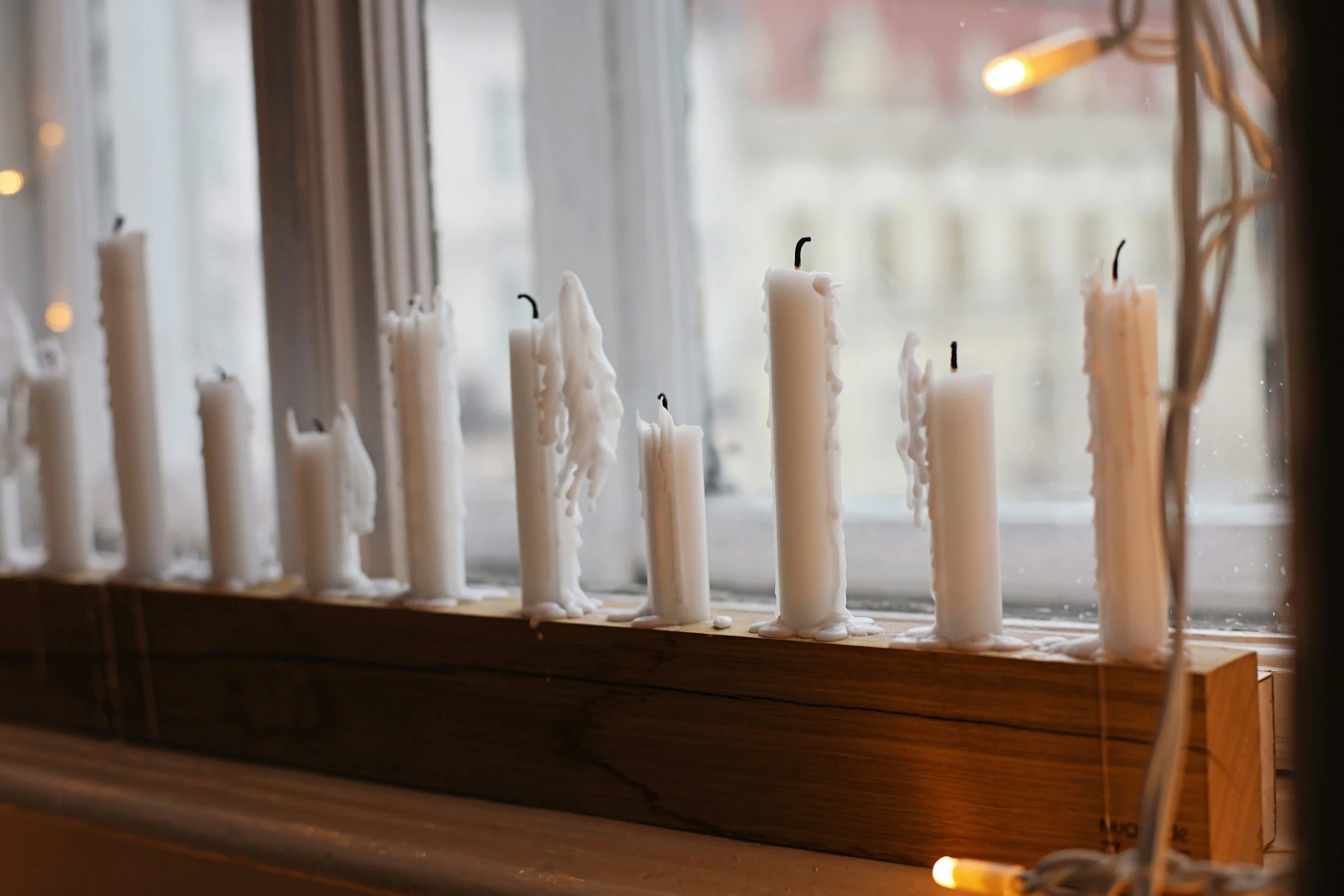
I’ve also been leaning deeply into my Scandinavian roots — reading, slowing down, embracing hygge in a way that feels grounding and healing. Candles lit in the early dark mornings. Warm meals made slowly. Creating beauty at home simply because it nourishes the nervous system.
It has been restorative in a way I didn’t know I needed.
There is a different kind of creativity that comes from rest. From protecting your nervous system. From being present with your family. From strengthening your body. From learning and stretching and choosing to build slowly instead of chaotically.
I’m not interested in doing more.
I’m interested in doing what matters — exceptionally well.
This quiet season has been about tending the roots:
Our faith.
Our health.
Our home.
Our heritage.
Our brides.
Our garden.
Our work.
Our vision.
Because when the real spring comes — I want to be ready.
And speaking of spring… as the garden plans solidify and the seeds begin to sprout, I’m reminded that there are only a couple of spring and summer flower subscriptions remaining. I’m intentionally keeping things smaller this year — more curated, more sustainable, more aligned with the kind of work I want to create.
If you’ve been considering it, now would be the time.
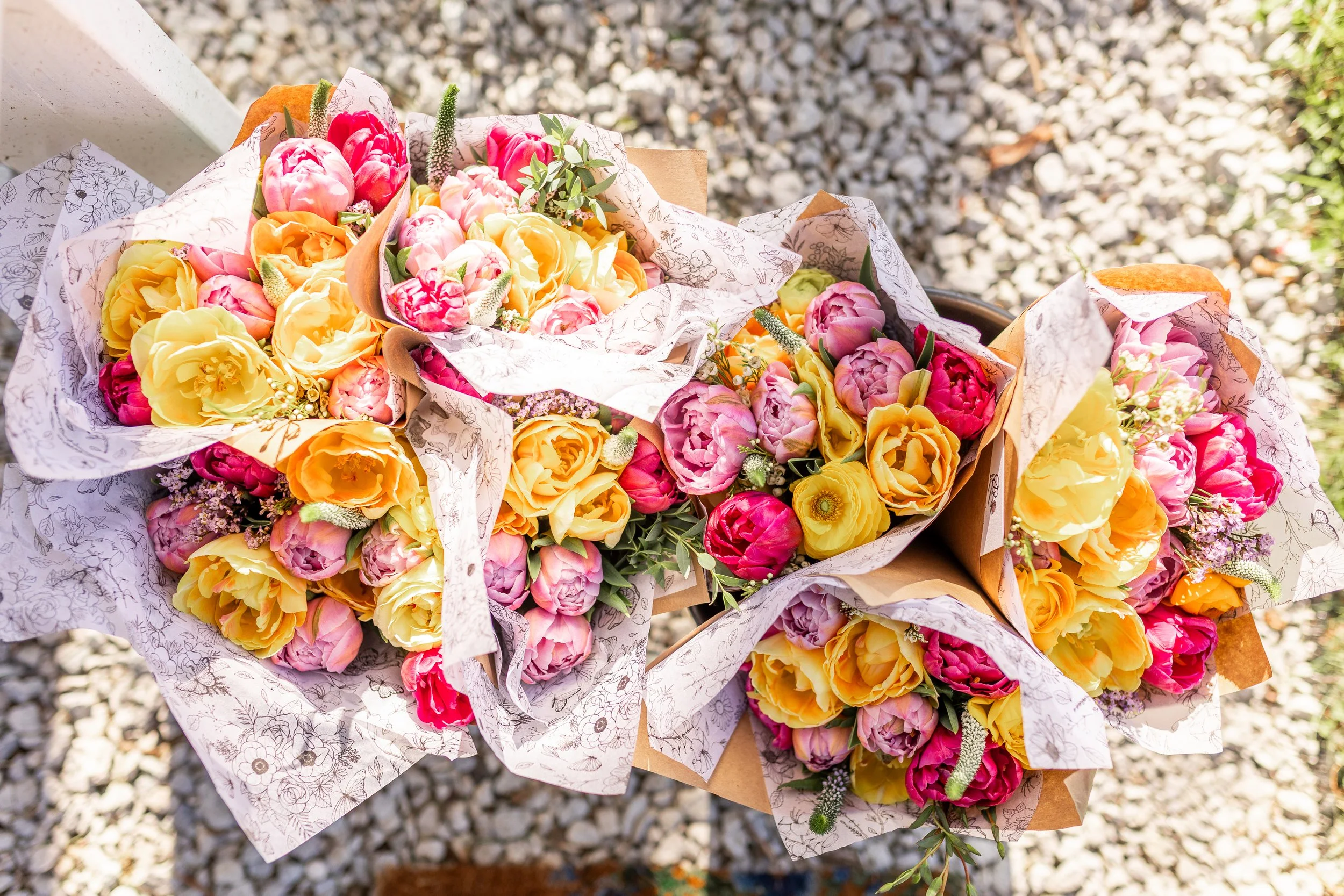
Photo: Liv Schafer Photography
If you’ve been in a quiet season too, maybe it’s not stagnation. Maybe it’s preparation.
There is so much beauty ahead.
I can feel it.
Thank you for being here — even in the quiet.
As we tend the roots,
Alex
Seed Starting, Motherhood, and Letting Go of Perfect
Motherhood has changed the way I start seeds — and honestly, the way I approach everything. In this season, seed trays sit on my dining room table, my toddler colors nearby, and perfection has taken a backseat to presence. Here’s what gardening and motherhood are teaching me about letting go, starting imperfectly, and trusting the process.
There’s a reel I published today that shows exactly what seed starting looks like in this season of my life: adapting, experimenting, and starting seeds with a baby in a diaper nearby.
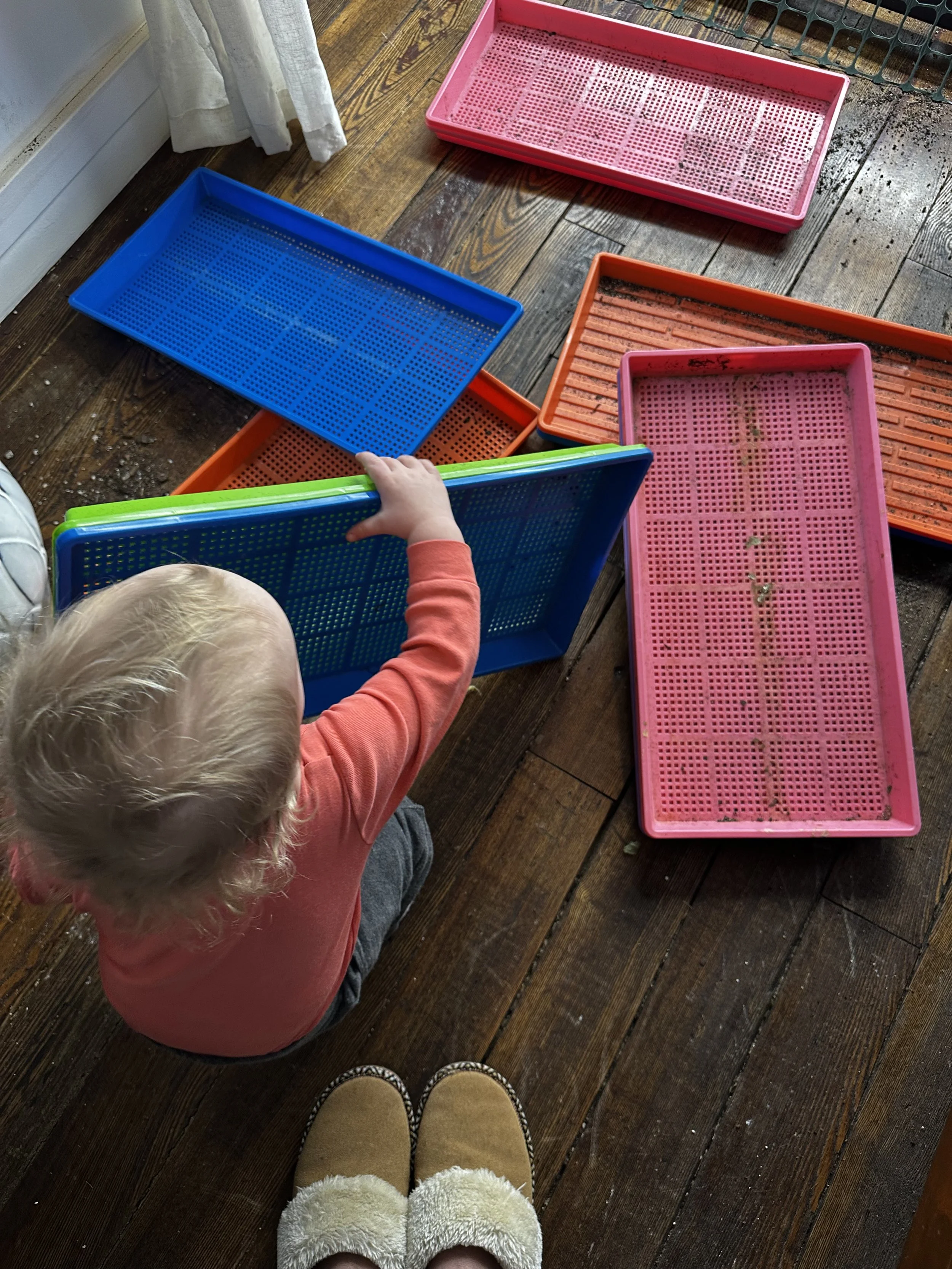
Prepping to wash seed trays, baby at my feet.
It captures not just how I’m starting seeds right now — but why it looks different.
Last year, I intentionally trialed a new seed-starting method. Not because what I was doing before was broken, but because I’m always learning, adjusting, and experimenting to find what works best — for my plants and for my life. Gardening, just like motherhood, has a way of teaching you that flexibility and curiosity matter more than rigid rules.
And if I’m being completely honest?
That reel is more real than anything I could have staged.

I’m starting seeds slower now. I’m doing it in pockets of time — during nap time, on my dining room table, with an old tote instead of a pristine workspace. At one point in the reel I say:
“You don’t need fancy things to start seeds.”
And I meant every word.
Motherhood has been — hands down — the hardest, most rewarding, most fulfilling transition of my life. It’s also the season where I’ve lost a lot of control… in a good way.
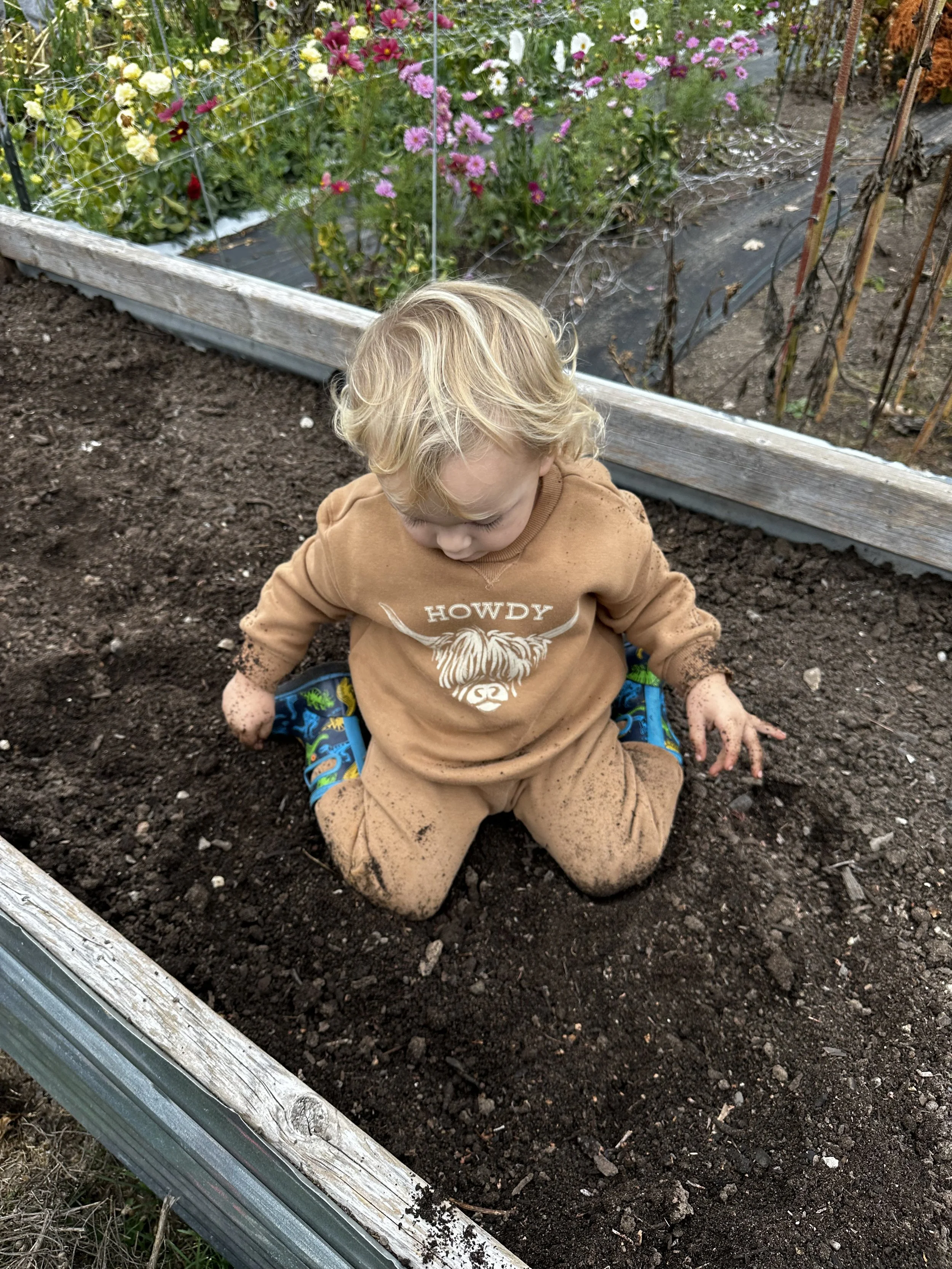
I don’t have nearly as much time as I used to. I can’t force productivity. And that constant need for things to be precise and perfect?
I’ve let a lot of that go — and the peace that’s come with it has been incredible.
If it gets done, it gets done.
If all I had the space and capacity for that day was a shower, snuggles, and coloring with my toddler? Then I am the true winner.
You Don’t Need Perfect — You Just Need to Start
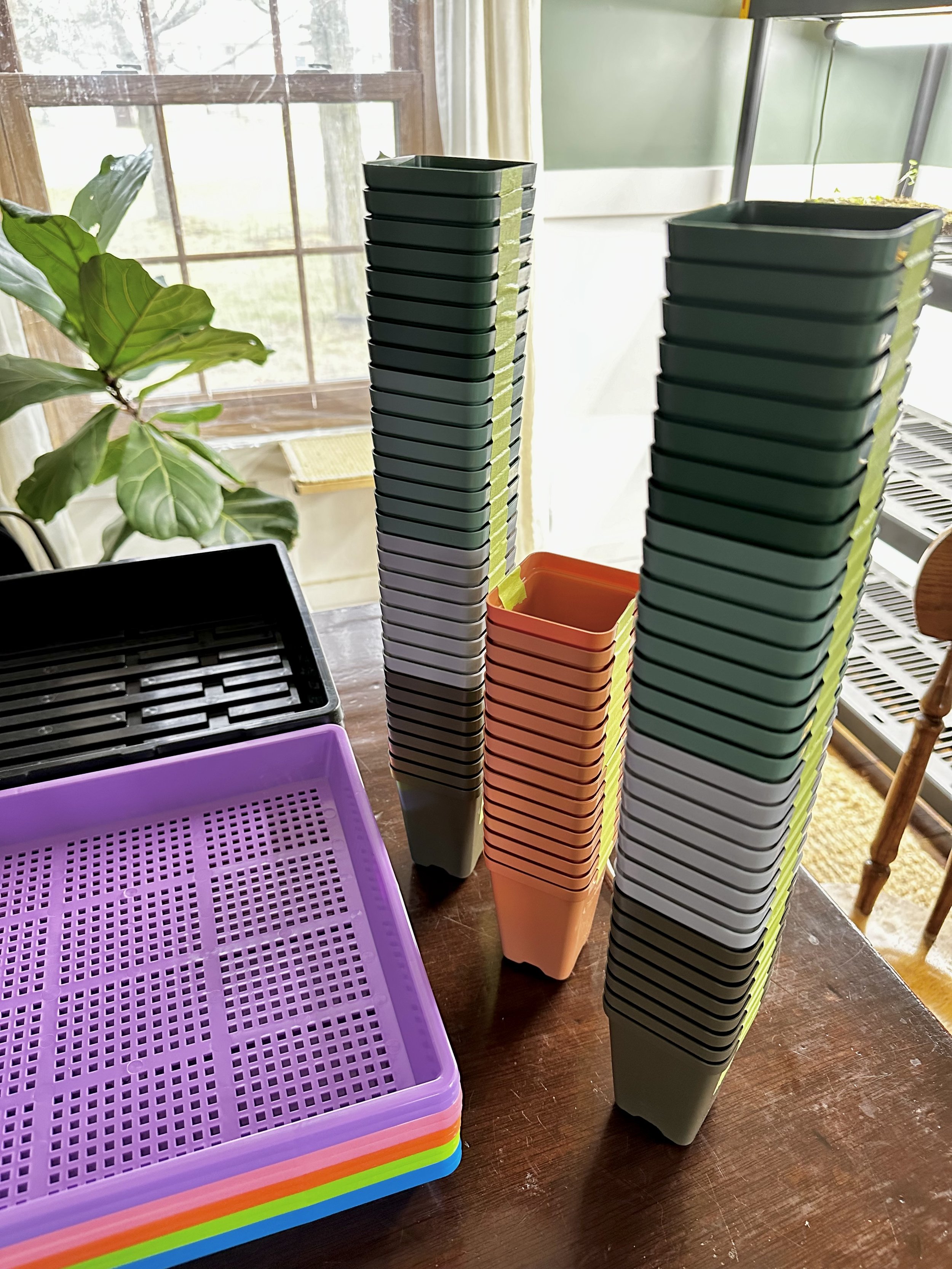
I used to think I needed all the things.
The best supplies.
The perfect setup.
The ideal workspace.
Then you throw a kid in the mix… and you learn real quick what you can and can’t do with a baby on your hip.
You hear it all the time, but it’s true:
As an entrepreneur and a corporate employee, it’s never going to be perfect to start. You’ll never have all the ducks in a row.
So if you’re waiting for that moment?
You’ll wait forever.
Will you fail?
Yes. A thousand times over.
I’ve killed more seedlings than I can count.
But what matters most?
You don’t quit.
So with all of that in mind — let’s talk seed starting.
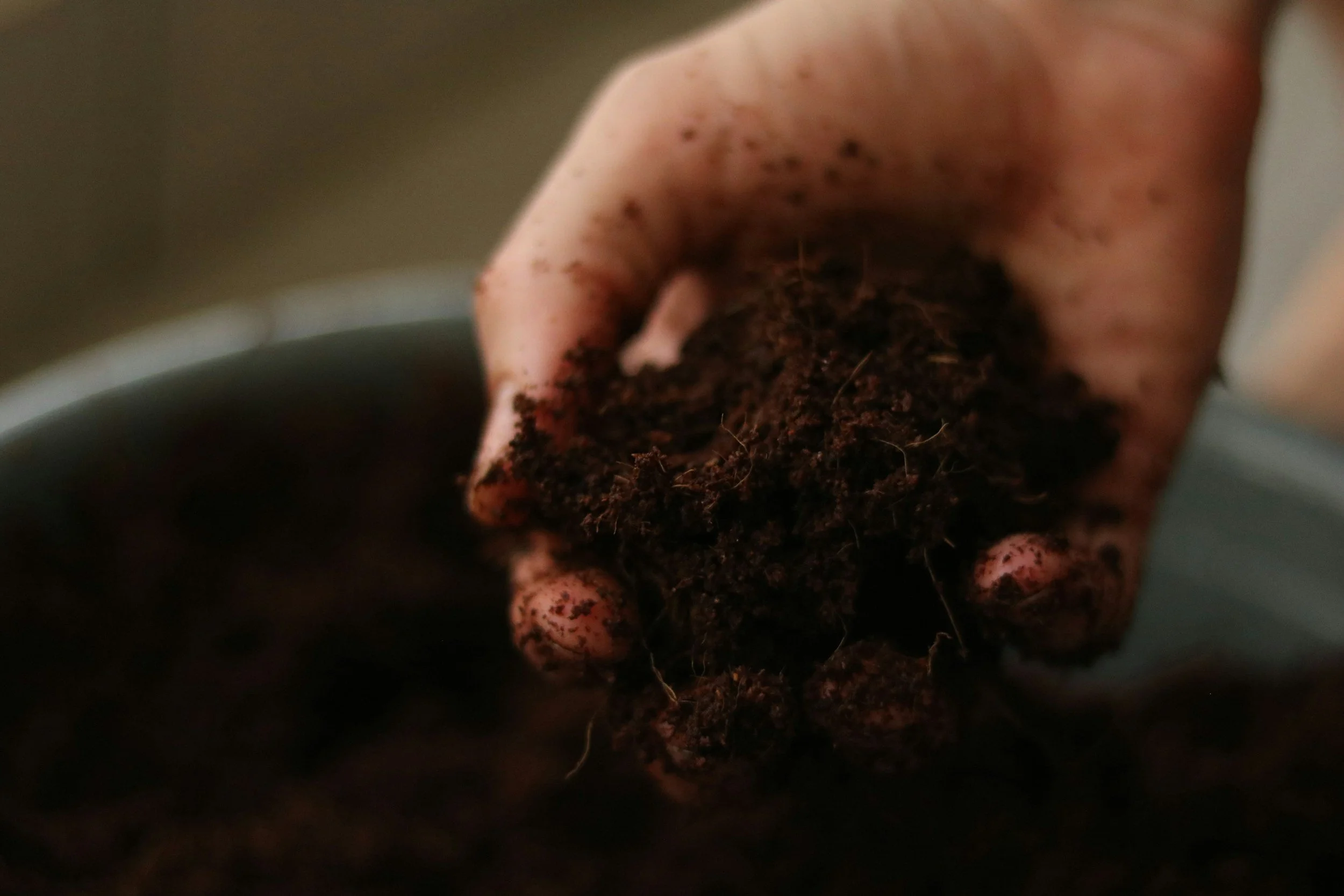
Seed Starting 101: From Real Life, Not Perfection
Have I invested in high-quality tools over the years? Yes.
Am I picky about what I use now? Also yes.
Am I still experimenting, testing, improving, and learning every single season? Absolutely.
But I didn’t start there.
I started with:
A bag of Pro-Mix from Menards
A vegetable steamer strainer to sift an entire 3-cubic-yard bag of soil
Solo cups, with holes drilled in the bottom by my husband
A whole lot of trial, error, and learning
You can start inexpensively.
You can start expensively.
That choice is yours.
The most important choice?
Just do it.
Growing your own garden — even just a veggie or two, or a small bed of flowers — is incredibly rewarding. And like any skill, there is some investment involved in learning how to start seeds indoors successfully.
Let’s break it down from start to finish.
1. Grow Lights (Lumens Matter)
Light is non-negotiable when starting seeds indoors.
Without enough light, seedlings stretch, weaken, and fall over.
What to look for:
Lumens: Aim for at least 2,000–5,000 lumens per shelf
Color temperature: Full spectrum or daylight (5000–6500K)
Distance: Lights should sit 1–3 inches above seedlings
Adjustability is key — your lights need to move with your plants as they grow.
➡️ I link the grow lights I use here.
2. Shelving or Racks
You don’t need a greenhouse. You don’t need fancy.
I’ve used:
Old shelving units
Garage racks
Dining room corners
What matters most:
Stability
Enough vertical space
The ability to raise and lower your lights
➡️ My current rack setup fits 3 Bootstrap Farmer trays per shelf, with 4 usable shelves, for a total of 12 trays per rack. We also have a couple on wheels which I love.
3. Containers: Cups, Trays, Soil Blocks & Air Prune Propagation Trays
There are a lot of container options out there — and yes, you can find cheaper trays on Amazon.
I’ve tried them.
For me, constantly replacing cracked or warped trays every single year became more frustrating (and more expensive in the long run) than helpful. Over time, I chose to start investing in what I’ve found to be the best trays on the market — products that hold up season after season and support healthy root development.
That’s how we landed on Bootstrap Farmer trays and containers. They’ve become the backbone of our seed-starting setup, and we use the heck out of them.
That said, you do not need everything at once. Start where you are, and build as you go.
How We Use Bootstrap Farmer Products
1020 Seed Starting Trays
These are the workhorses of our system. We use them for:Holding Air Prune Propagation Trays
Soil blocking
Catch trays for individual nursery pots
1020 Mesh Deep Trays (Soil Blocking)
When soil blocking, we pair the 1020 trays with their mesh deep trays to allow proper airflow and drainage.
Individual Nursery Pots
These are what we use for crops that need more root space early on:Tomatoes
Cucumbers
Peppers
And similar transplants
Cell Trays, Domes & Starter Pots
We use these for:Starting our own plugs
Pre-starting dahlia tubers
Crops that benefit from a more contained, protected start
Their products are 1000% worth the investment if you plan to start seeds year after year.
If you’re just trialing seed starting or want a budget-friendly way to begin, this Amazon starter kit is a great option:
👉 https://amzn.to/4q5Z2Ck
Other Container Methods I’ve Used
Solo cups
Traditional seed trays
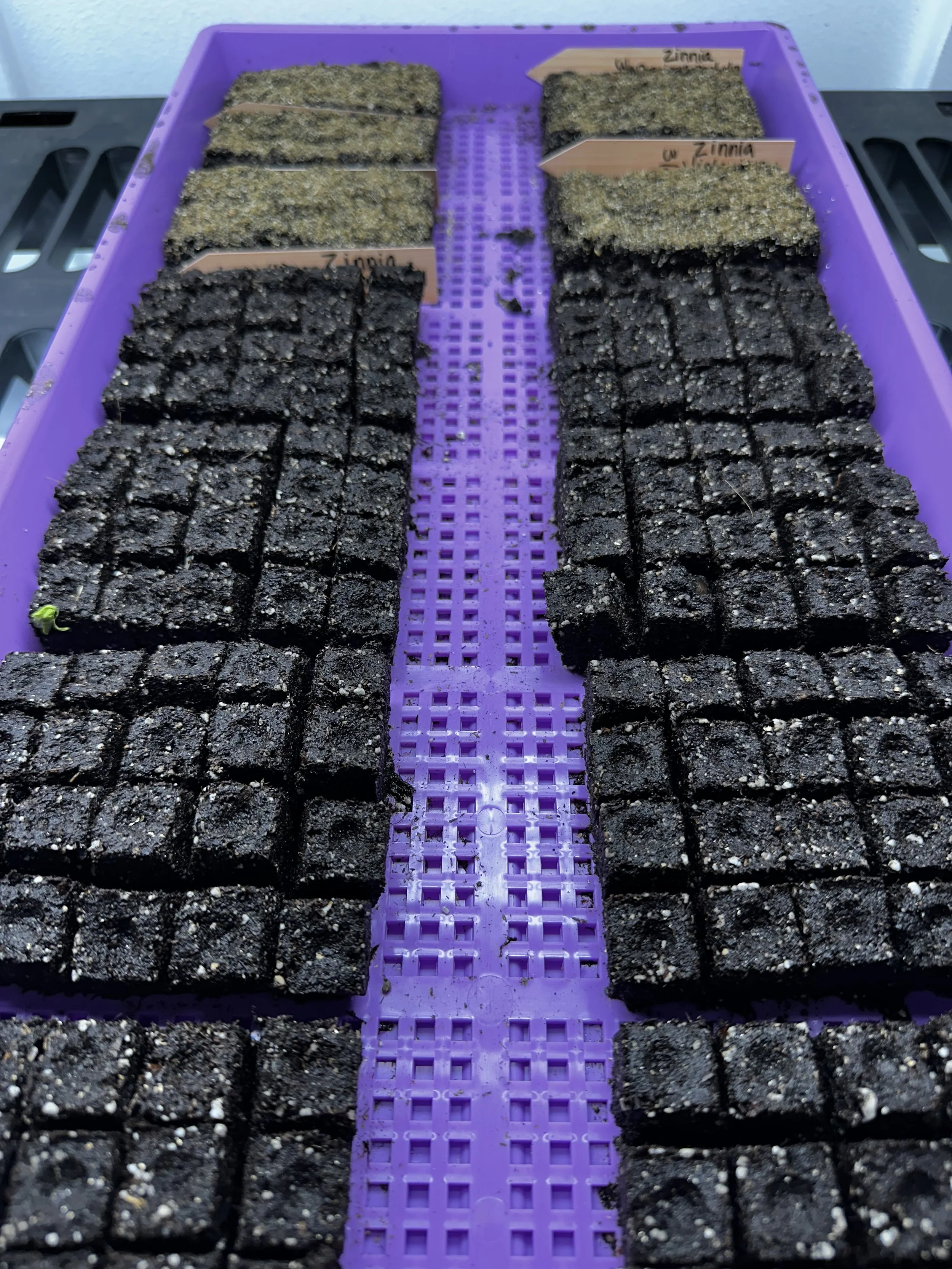
Soil blocks
Air Prune Propagation Trays (a method I experimented with last year)
Each has its place — and every one of them can grow healthy plants.
A Quick Transparency Note
Just to be completely clear — I’m not affiliated with Bootstrap Farmer. I don’t get paid to recommend their products (though that would be pretty awesome someday).
I share them simply because we genuinely love their products and use them constantly in our seed-starting setup.
Soil Blocking (An Investment That’s Been Worth It)
Soil blocking is another method we use regularly, and it’s one that does require a bit more intention — both in learning and in tools.
Soil blocks eliminate plastic containers altogether by forming compact cubes of soil that encourage strong, air-pruned root systems. When done well, they transplant beautifully and reduce shock.
Over time, we’ve chosen to invest in Swiftblocker, and it’s been completely worth it. Their tools are thoughtfully designed, durable, and have made soil blocking far more efficient and consistent for us. As we continue to grow and refine our process, we’re slowly building our inventory with their products.
👉 Swiftblocker tools:
https://www.swiftblocker.com/shopswiftblocker
That said — this is another area where you absolutely don’t have to start with top-of-the-line tools.
When we first began soil blocking, we used much more basic options while learning the process:
A simple handheld soil blocker:
https://amzn.to/4pnzX4vAnd this larger multi-block option:
https://amzn.to/4jmoJfn
Those tools worked just fine for learning soil consistency, pressure, and technique.
Like most things in gardening, soil blocking can be done:
Inexpensively while you’re learning
Or with higher-quality tools once you know it’s a method you’ll stick with
Both approaches are valid — and both can grow healthy plants.
Soil blocking is one of those methods that rewards patience and practice — and like everything else in this season of life, I’ve learned to let it be imperfect while I learn.
Air Prune Propagation Trays (What I Experimented With)
Last year, I experimented with Air Prune Propagation Trays, and they’ve become a really valuable tool in my setup.
These trays work by allowing air to naturally prune roots. When roots reach the edges of the cell and hit air, they stop growing and branch out instead — creating a dense, healthy root system.
Why I Like Them:
Strong root development
Less transplant shock
Durable and reusable
More forgiving than soil blocking on busy days
I still love soil blocking — and I still use it.
But in this season of motherhood, air prune trays offer efficiency and consistency when I don’t have the margin for perfection.
➡️ I link my exact Bootstrap Farmer Air Prune Propagation Trays here.
4. Soil: The Foundation of Everything
Soil is one place I no longer cut corners — because everything starts here.
When you’re starting seeds indoors, soil needs to be fine, light, and consistent so delicate seedlings can easily push through the surface. Heavy or chunky mixes can prevent germination, restrict root development, and make moisture harder to manage.
A good seed-starting mix should:
Hold moisture without becoming soggy
Allow airflow to roots
Be fine enough for tiny seedlings to emerge easily
My Go-To Seed Starting Mix
Morgan Composting — Dairy Doo Seed Starting Mix
Hands down the best seed-starting mix I’ve ever used.
It’s only available through Michigan suppliers — we purchase ours from Sunshine Products of Dansville, a local small business that carries Morgan Composting’s Dairy Doo line. The good news is, they do ship throughout the U.S.
This mix is consistently fine, well-balanced, and easy to work with whether you’re soil blocking, using trays, or starting seeds in individual pots.
How I Amend It
I also amend my seed-starting mix with:
Wool pellets from Wild Valley Farms (no affiliation)
This simple addition helps improve moisture retention and adds gentle, slow-release nutrients — especially helpful during early growth.
Why This Combination Works
Together, this mix creates:
Excellent moisture retention
Proper airflow for healthy roots
Balanced nutrition without overwhelming young seedlings
Soil Consistency Tip
No matter what mix you use, consistency matters.
Your soil should feel like a wrung-out sponge — moist enough to hold together, but not dripping wet. This is especially important for soil blocking, where moisture level can make or break the process.
➡️ Here is a great seed starting mix alternative. Or this one!
5. Planting & Watering
Bottom water whenever possible
Keep soil moist, not soaked
Use humidity domes only until germination
Remove domes as soon as seedlings emerge
Airflow is essential — stagnant air leads to disease.
The Watering Tool That Changed Everything for Me
This is one of those tools I didn’t realize I needed until I used it — and now I genuinely wouldn’t want to seed start without it.
I swear by an electric automatic spray mister, and it has saved me so much hassle over the years.
When you’re starting seeds — especially in soil blocks, air prune propagation trays, or shallow cells — gentle watering matters. A harsh stream of water can displace seeds, compact soil, or damage tiny seedlings.
This mister gives:
A consistent, fine mist
Even moisture without disturbing soil
One-handed operation (which matters when you’re juggling a baby)
It’s rechargeable, lightweight, and takes the guesswork out of hand watering. No pumping. No wrist fatigue. No accidentally blasting seedlings across the tray.
On busy days — which is most days in this season of life — this tool lets me water quickly, gently, and move on.
6. Heat Mats (Do You Need Them?)
Heat mats aren’t required for every seed — but for certain crops, they can make a huge difference.
Heat mats help maintain a consistent soil temperature, which speeds up germination and improves overall success rates, especially for heat-loving plants. They warm the soil, not the air, creating the ideal environment for seeds to sprout evenly.
I Recommend Heat Mats For:
Tomatoes
Peppers
Eggplant
Basil
Celosia (especially important for consistent germination)
Dahlias and other tubers
Cool-season crops like lettuce, spinach, and brassicas typically don’t need bottom heat and will germinate just fine without it.
How I Use Heat Mats
I place heat mats under trays only until seeds germinate
Once seedlings emerge, trays come off the heat
If possible, I use a thermostat to avoid overheating
Heat mats work best when paired with proper lighting and airflow
Used correctly, heat mats can dramatically reduce germination time and help create more uniform seedlings — which means less frustration and fewer do-overs.
Heat mats are one of those tools that aren’t essential for everything, but when you need them, they’re absolutely worth having.
➡️ I link the heat mats and heat mats with thermostat I use here.
7. Daily Maintenance
This doesn’t have to be complicated.
Each day:
Check moisture
Adjust lights
Observe growth
Some days you’ll do it perfectly.
Some days you’ll forget.
Plants are more resilient than we give them credit for.
8. Hardening Off
Before planting outdoors:
Start with 30–60 minutes outside
Gradually increase exposure
Protect from wind and harsh sun
Skipping this step often leads to setbacks — take the time.
9. Accessories That Make Life Easier
These aren’t required, but they help:
Light pulleys for easy adjustment
Timers (I also have a power strip one as well)
Fans for airflow
Labels (trust me on this one)
Final Thoughts
You don’t need the perfect setup.
You don’t need endless time.
You don’t need to get it right the first time.
You will fail.
You will learn.
You will grow.
And one day, you’ll look back at seeds started on a dining room table during nap time — and realize that was never a limitation.
It was the beginning 🌱
Thank you for being here!
Continuously growing,
Alex